59072023
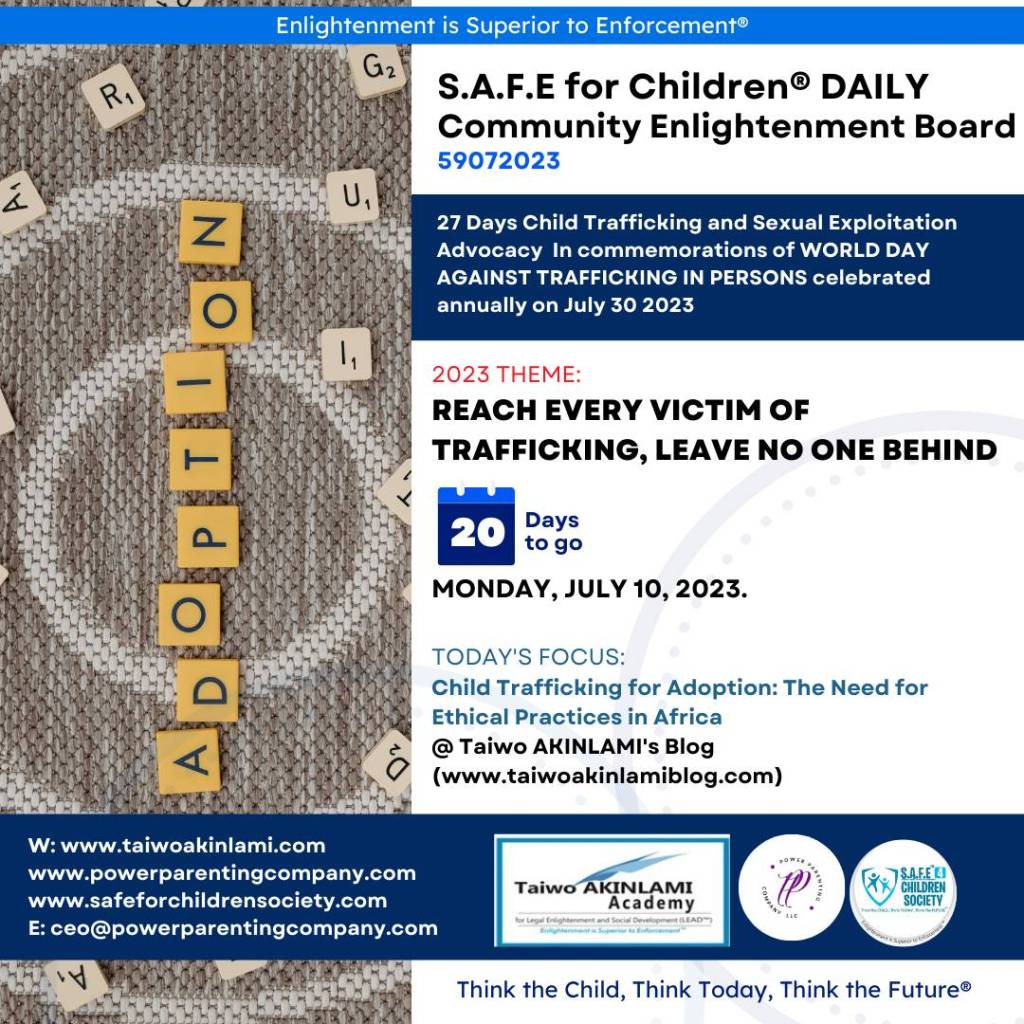
Child trafficking for adoption in Africa is a deeply concerning issue that calls for urgent action and the establishment of ethical practices. While adoption can provide children at risk with nurturing and supportive families, the prevalence of child trafficking poses a significant threat to their well-being and human rights. This advocacy piece aims to shed light on the need for ethical adoption practices in Africa, backed by relevant statistics that highlight the urgency of addressing this critical issue.
Alarming Statistics:
a) According to the United Nations Office on Drugs and Crime (UNODC), Africa accounts for approximately 21% of global human trafficking victims, with children being particularly vulnerable to exploitation.
b) The International Organization for Migration (IOM) estimates that every year, tens of thousands of children in Africa fall victim to trafficking, including those trafficked for adoption purposes.
c) A study conducted by UNICEF revealed that over 30% of children in intercountry adoptions from Africa experienced irregularities or fraud, indicating potential involvement of child trafficking.
Children at Risk:
a) Poverty, conflict, and social instability make children in Africa susceptible to trafficking for adoption. Desperate parents may be deceived by traffickers who promise a better future for their children through adoption, exploiting their vulnerabilities.
b) Orphanages and children’s homes, intended to provide care and protection, are sometimes implicated in child trafficking schemes, with unscrupulous individuals operating under the guise of legitimate adoption agencies.
Consequences of Unethical Adoption:
a) Children subjected to trafficking for adoption often suffer severe emotional and psychological trauma, being separated from their families and culture without proper consent or due process.
b) The lack of proper screening and background checks in unethical adoptions may expose children to abusive environments, exploitation, or even re-trafficking.
c) The impact is not limited to the trafficked child alone but also affects their birth families, who are left devastated and unaware of their child’s fate.
The Need for Ethical Practices:
a) Strengthening legal frameworks: African nations must enact and enforce stringent laws to combat child trafficking, including provisions that regulate adoption practices and ensure the best interests of the child.
b) Collaboration and oversight: Governments, adoption agencies, and international organizations should work together to establish effective monitoring systems, rigorous vetting procedures, and oversight mechanisms to prevent child trafficking in adoption.
c) Promoting family preservation and support: Investments in poverty reduction, education, healthcare, and social services can help families stay together, reducing the vulnerability of children to trafficking.
Conclusion:
Protecting the rights and well-being of children in Africa requires a collective effort to eradicate child trafficking for adoption. By implementing ethical adoption practices, strengthening legal frameworks, and prioritizing family preservation, we can ensure that every child’s best interests are upheld.
Let us join hands and advocate for a future where adoption becomes a genuinely compassionate and ethical process, safeguarding the rights and dignity of the most vulnerable among us.
 Taiwo AKINLAMI