61072023
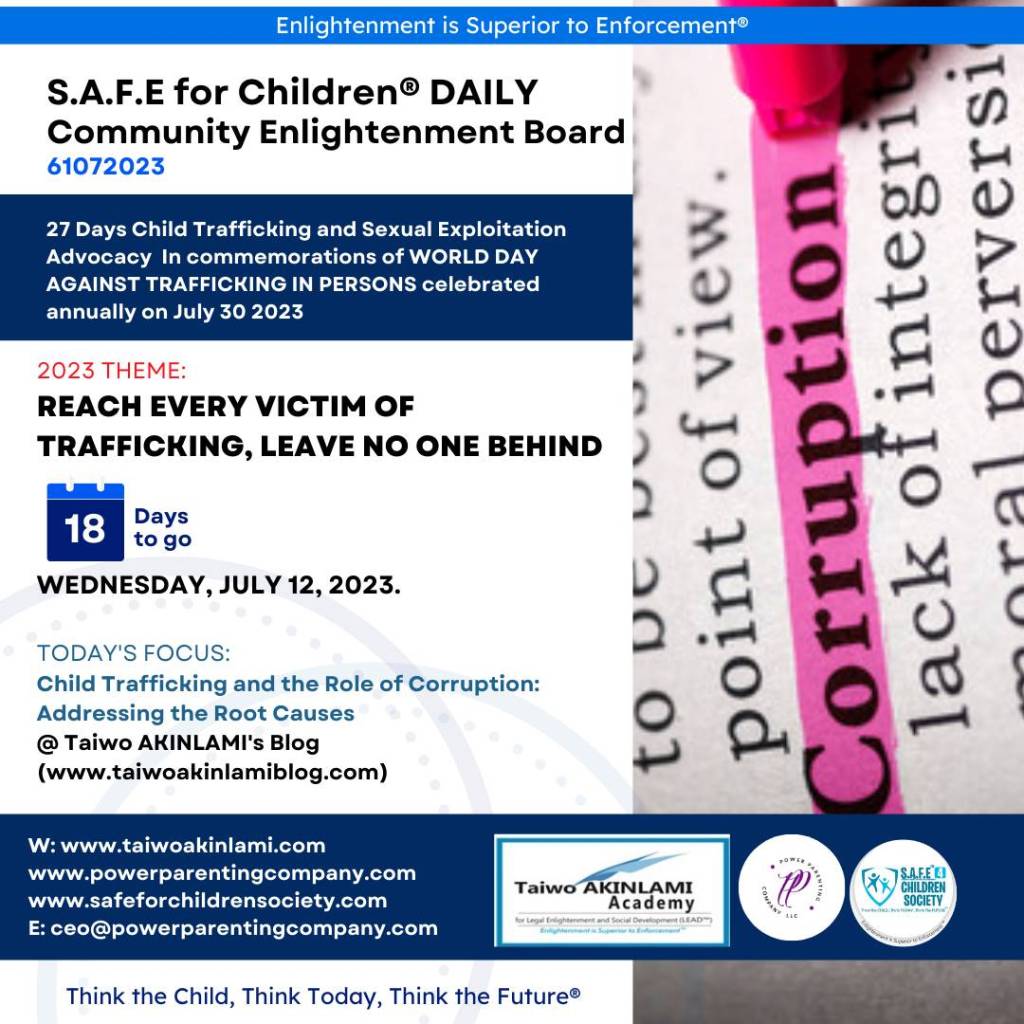
Corruption has long been a significant challenge in Africa, perpetuating poverty, inequality, and social injustice. Beyond its immediate consequences, corruption also plays a devastating role in fueling child trafficking across the continent. This concise advocacy piece aims to shed light on the root causes of corruption in Africa and emphasize the critical need for action to counter its impact on vulnerable children.
The Vicious Cycle: Corruption and child trafficking are deeply intertwined, forming a vicious cycle that perpetuates the suffering of innocent children. Corrupt practices, such as bribery, embezzlement, and abuse of power, weaken governance systems, erode the rule of law, and create an environment conducive to human trafficking.
Poverty and Desperation: One of the root causes of corruption in Africa is poverty. The lack of economic opportunities, coupled with inadequate social safety nets, pushes individuals and families into desperate situations. Exploiting these vulnerabilities, traffickers prey on children and their families, promising a better life while subjecting them to unimaginable exploitation and abuse.
Weak Institutions and Governance: Corruption thrives in societies where institutions and governance structures are weak or compromised. When public officials engage in corrupt practices, it undermines the ability of governments to protect their citizens effectively. This enables child traffickers to operate with unbridled impunity, as law enforcement and justice systems become compromised.
Lack of Transparency and Accountability: Transparency and accountability are vital in combating corruption and child trafficking. However, the lack of effective mechanisms for reporting and investigating corruption cases perpetuates a culture of impunity. As a result, traffickers continue to exploit children, knowing that they are unlikely to face meaningful consequences for their actions.
Collaboration and International Cooperation: Addressing the root causes of corruption and its link to child trafficking requires collective action and international cooperation. African nations must work together to strengthen institutions, promote transparency, and enact comprehensive anti-corruption legislation. Additionally, international partners should provide support, resources, and expertise to combat corruption and protect the rights of vulnerable children.
Empowering Communities and Education: Empowering communities through education and awareness is essential in breaking the cycle of corruption and child trafficking. By providing education on the risks and consequences of corruption and human trafficking, individuals can become active agents of change. Community-based initiatives, along with the involvement of civil society organizations, can foster a culture of integrity and resistance against corruption and child exploitation.
Conclusion: Addressing the root causes of corruption in Africa is crucial to combating child trafficking and ensuring a safer future for the continent’s children. By tackling poverty, strengthening institutions, promoting transparency, and empowering communities, we can create an environment that safeguards the rights and well-being of our most vulnerable citizens. Together, let us stand united in the fight against corruption and protect our children from the horrors of trafficking.
 Taiwo AKINLAMI