65072023
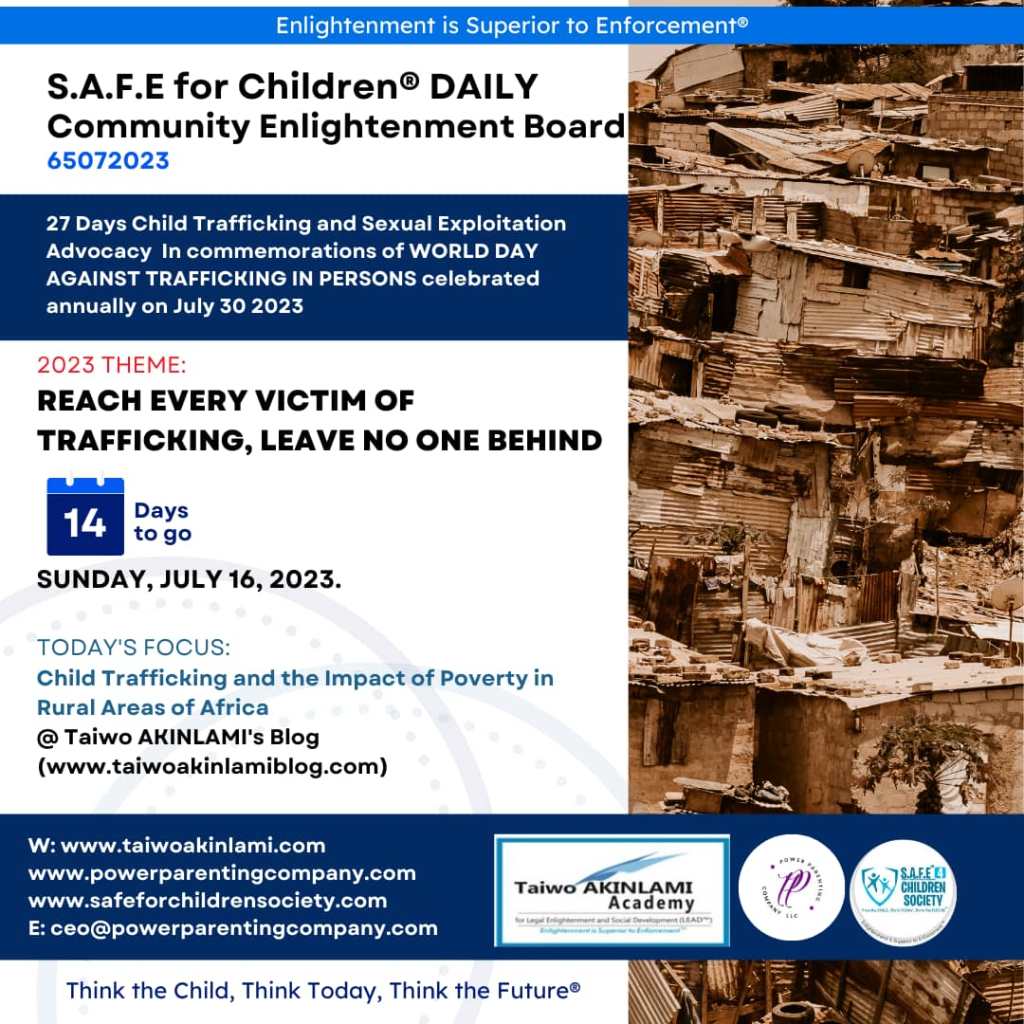
Child trafficking is a pressing issue that plagues many regions of Africa, particularly rural areas, where poverty exacerbates vulnerability. This advocacy piece sheds light on the alarming statistics of child trafficking in rural Africa and the intertwined impact of poverty, while emphasizing the urgent need for action.
According to UNICEF, an estimated 30% of trafficking victims globally are children, and Africa accounts for a significant portion of this number.
Poverty plays a significant role, as rural areas experience higher poverty rates compared to urban centers, increasing the vulnerability of children to trafficking.
The International Labour Organization (ILO) reports that poverty pushes families in rural areas to make desperate choices, often resulting in the exploitation of their children through trafficking.
Studies indicate that poverty-related factors, such as lack of education, limited access to healthcare, and inadequate social support systems, contribute to the prevalence of child trafficking in rural communities.
Impact of Poverty in Rural Areas:
Limited economic opportunities: Poverty deprives families of basic necessities and economic stability, forcing them to seek alternative means of survival.
Lack of education: Poverty hampers access to quality education, leaving children unprepared to recognize the dangers of trafficking and vulnerable to manipulation.
Inadequate healthcare: Limited access to healthcare services increases the risk of health complications, making children more susceptible to exploitation.
Weakened social support systems: Poverty-stricken communities often lack adequate social structures and resources to protect children from traffickers, leaving them exposed to exploitation.
Taking Action:
Empowerment through education: Prioritize education in rural areas, providing children with knowledge and skills to recognize and prevent trafficking.
Economic empowerment: Create sustainable livelihood opportunities in rural communities, offering families alternative means of income to alleviate poverty.
Strengthen community networks: Foster collaborations among local organizations, government agencies, and community leaders to develop and implement comprehensive anti-trafficking strategies.
Support systems for survivors: Establish safe shelters, counseling services, and vocational training programs to rehabilitate and reintegrate trafficking survivors into society.
Conclusion: Child trafficking in rural Africa is an urgent concern fueled by poverty and its associated challenges. By addressing the root causes of poverty, enhancing education, fostering economic empowerment, and strengthening community networks, we can make significant strides in combating child trafficking. Together, let us break the chains of exploitation, protect vulnerable children, and build a future where every child in rural Africa can thrive.
 Taiwo AKINLAMI