71072023
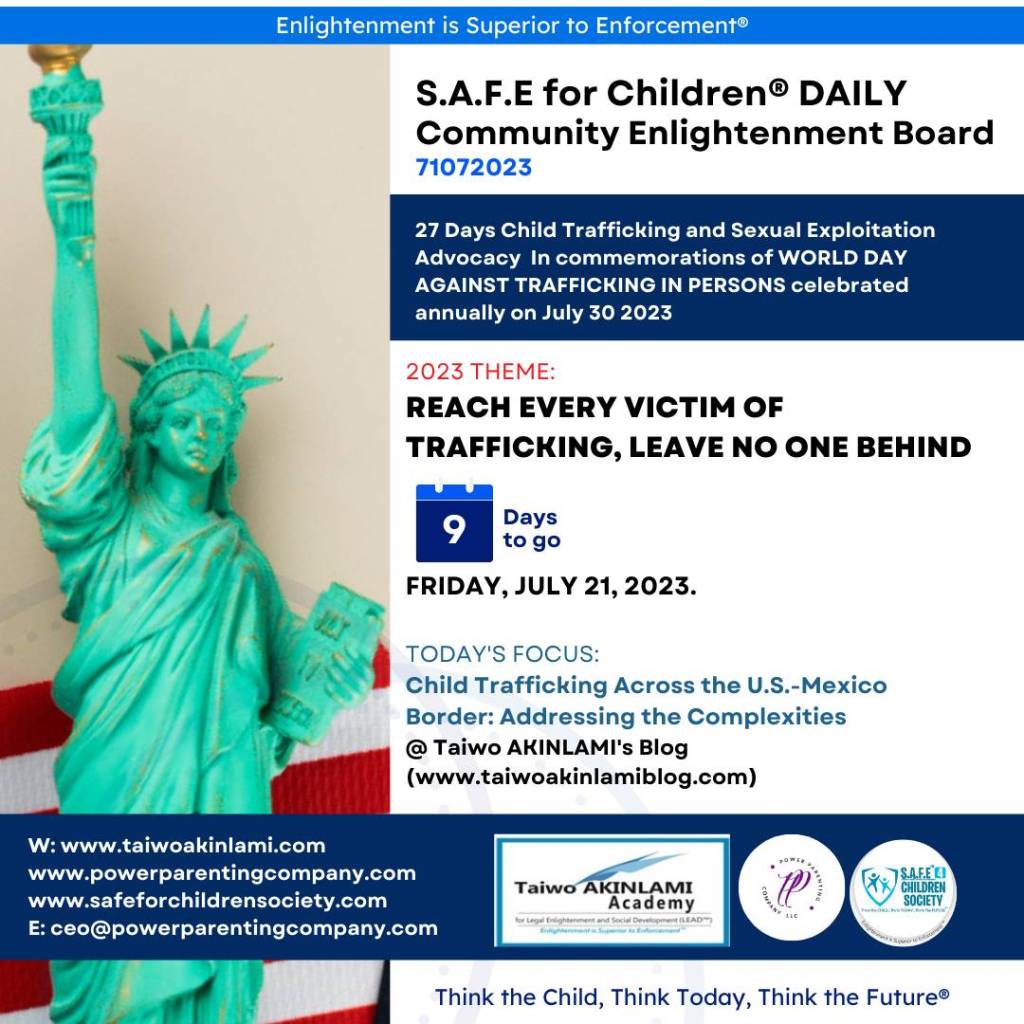
I recently watched ‘Sound of Freedom,’ an incredible true story that follows a former government agent turned vigilante on a perilous mission to rescue hundreds of children from sex traffickers. Although the movie’s setting is not the U.S.-Mexico border, it serves as a vivid and noble reminder of the pervasive evil of child trafficking across North and South America. The film underscores the urgent need for collective action to put an end to this menace and protect vulnerable children from exploitation.
Child trafficking is a harrowing reality that continues to plague societies across the globe, and the U.S.-Mexico border is no exception. This region has become a hotspot for the heinous crime of child trafficking due to various factors, including economic disparities, political instability, and lax border controls. Addressing this complex issue requires a comprehensive and collaborative effort from governments, NGOs, law enforcement agencies, and communities on both sides of the border.
The Scale of the Problem:
Child trafficking is a lucrative business, with criminals exploiting vulnerable children for forced labor, sexual exploitation, and other illicit activities. The statistics on child trafficking across the U.S.-Mexico border are alarming:
According to the U.S. Department of State, Mexico is a source, transit, and destination country for human trafficking, with the majority of victims being children and women.
A report by the United Nations Office on Drugs and Crime (UNODC) reveals that Mexico is one of the top 10 countries with the highest number of trafficking victims.
The U.S. Department of Homeland Security identifies the U.S.-Mexico border as a major transit route for human trafficking, with thousands of victims being smuggled across the border every year.
The non-profit organization, Polaris, estimates that there were over 10,000 potential victims of human trafficking in the United States in 2020.
Factors Driving Child Trafficking:
Several factors contribute to the prevalence of child trafficking across the U.S.-Mexico border:
Poverty and Lack of Opportunities: Economic disparities in the region force many families to seek better lives in the United States. Traffickers exploit this desperation, promising jobs and opportunities to vulnerable children and their parents.
Political Instability and Violence: Ongoing conflicts and political instability in some parts of Mexico create an environment where criminal organizations can operate with impunity, making it easier for them to engage in human trafficking.
Weak Border Controls: Porous borders and inadequate law enforcement efforts allow traffickers to move victims across the border undetected.
Demand for Cheap Labor and Commercial Sex: The demand for cheap labor in industries like agriculture and construction, as well as the demand for commercial sex, fuels the trafficking of children.
Addressing the Complexities:
To combat child trafficking effectively, a multi-faceted approach is essential:
Strengthening Law Enforcement: Both the U.S. and Mexican governments must collaborate to enhance border security and improve intelligence sharing to identify and intercept trafficking networks.
Public Awareness and Education: Comprehensive awareness campaigns should be conducted to educate communities about the dangers of trafficking and how to recognize and report potential cases.
Victim Support and Rehabilitation: Adequate resources should be allocated to provide victims with shelter, medical care, counseling, and legal support to help them rebuild their lives.
Addressing Root Causes: Addressing the root causes of trafficking, such as poverty and lack of opportunities, requires targeted social and economic interventions to empower vulnerable communities.
International Cooperation: Child trafficking is a transnational crime that demands international cooperation between the U.S. and Mexico and other countries to dismantle trafficking networks and hold traffickers accountable.
Child trafficking across the U.S.-Mexico border is a grave concern that demands urgent attention and action. By addressing the complexities of this issue through collaboration, awareness, and comprehensive policies, we can work together to protect the most vulnerable members of our society and create a safer and more secure future for all children.
 Taiwo AKINLAMI