73072023
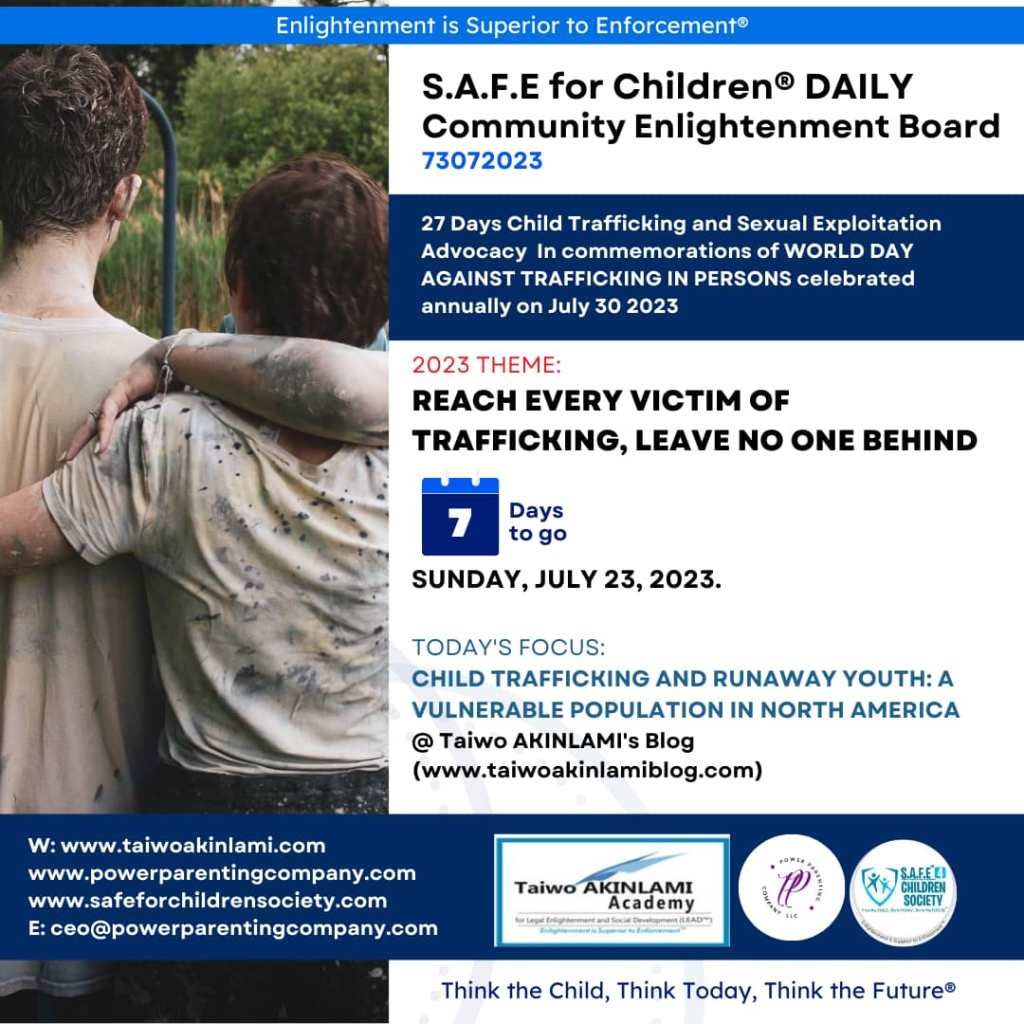
In the vast expanse of North America, there lies a hidden tragedy that threatens the very essence of our society – child trafficking and runaway youth. These vulnerable populations, often lost amidst the shadows, deserve our unwavering attention and protection. The statistics are alarming, shedding light on a crisis that demands immediate action and advocacy.
Child Trafficking in North America:
Every Year, Thousands of Children Are Trafficked: According to the United Nations Office on Drugs and Crime (UNODC), an estimated 21,000 people are trafficked across North America each year, and a significant portion of these victims are children.
Most Victims Are Female and Exploited Sexually: The National Center for Missing and Exploited Children (NCMEC) reported that 88% of all sex trafficking victims in the United States are female, and the majority are children. They are forced into a life of exploitation, subjected to unthinkable abuse.
Foster Care and Homelessness Increase Vulnerability: The Polaris Project, an organization combating human trafficking, revealed that children in the foster care system and those experiencing homelessness are particularly susceptible to trafficking due to their lack of stable support networks.
Runaway Youth in North America:
Over 1 Million Youth Run Away Annually: The National Runaway Safeline estimates that each year, more than one million young people run away from home or face homelessness in the United States and Canada, making them vulnerable to exploitation and trafficking.
Reasons for Running Away: A survey by the National Conference of State Legislatures (NCSL) indicates that youth may flee their homes due to family conflicts, abuse, neglect, or seeking to escape difficult living conditions.
High-Risk Profiles: victims of bullying, and those with a history of trauma are at a higher risk of running away and facing serious dangers on the streets.
Advocacy and Solutions:
Awareness and Education: Raising public awareness about child trafficking and runaway youth is crucial in understanding the scale of the issue and garnering support for preventive measures.
Enhanced Support Systems: Strengthening the foster care system, providing more resources for homeless youth, and implementing programs to assist families in crisis can reduce the number of vulnerable children on the streets.
Collaboration and Reporting: Encouraging cooperation between law enforcement agencies, social services, and community organizations can help identify and rescue victims, as well as apprehend traffickers.
Trauma-Informed Care: Offering trauma-informed care and mental health services to at-risk youth can help address underlying issues and reduce their susceptibility to exploitation.
Child trafficking and runaway youth are not just statistics; they are innocent lives in jeopardy. As responsible members of North American society, we must come together to protect our future generation. Through advocacy, education, and coordinated efforts, we can create a safer, more compassionate environment that nurtures and safeguards every child’s right to a secure and fulfilling life. Let us stand united against this menace, leaving no child behind.
Child trafficking and runaway youth are not just statistics; they are innocent lives in jeopardy. As responsible members of North American society, we must come together to protect our future generation. Through advocacy, education, and coordinated efforts, we can create a safer, more compassionate environment that nurtures and safeguards every child’s right to a secure and fulfilling life. Let us stand united against this menace, leaving no child behind.
 Taiwo AKINLAMI