78072023
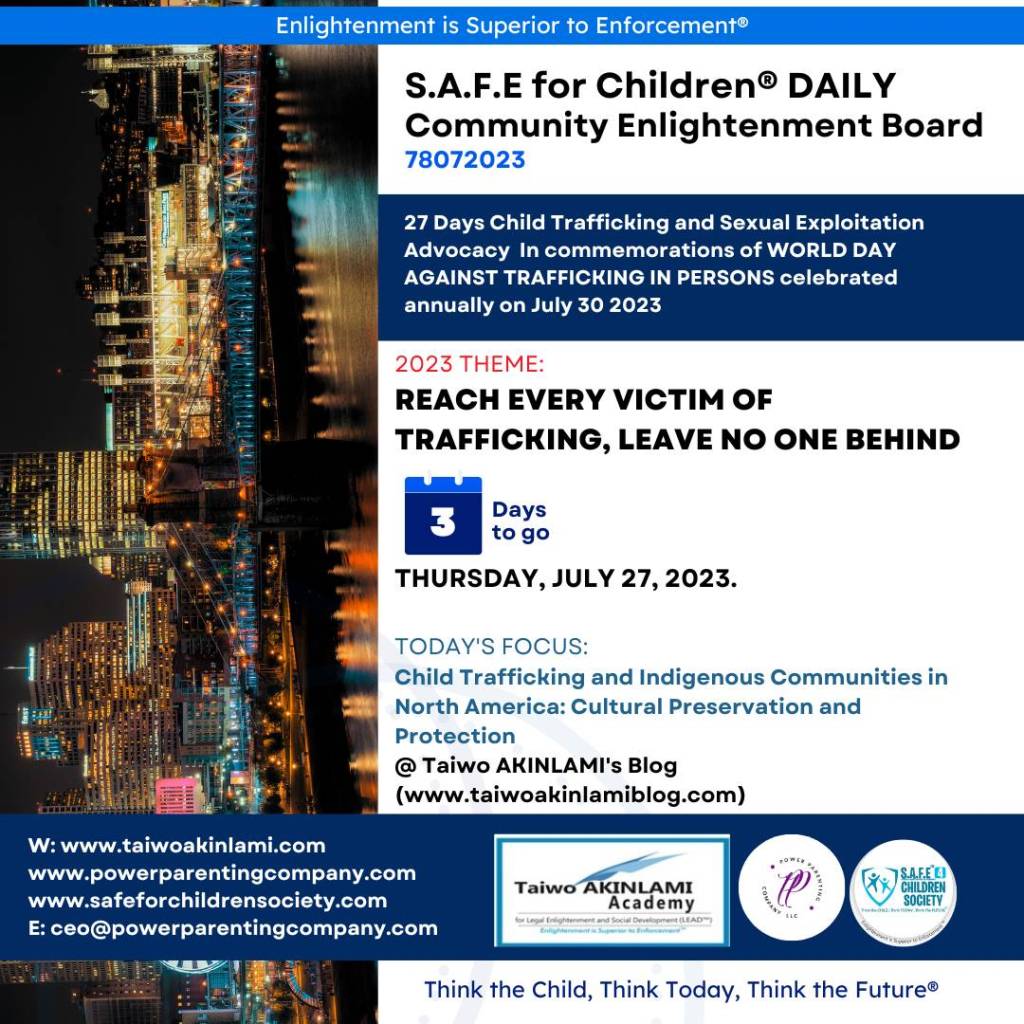
Child trafficking remains a heinous crime that poses a significant threat to the indigenous communities of North America. These communities, with their unique cultures and traditions, are particularly vulnerable to exploitation and abuse. To safeguard their cultural heritage and protect the future generations, it is imperative to address the pressing issue of child trafficking. This advocacy article aims to shed light on the gravity of the problem and propose measures to preserve and protect the indigenous children and their communities.
The Gravity of Child Trafficking in Indigenous Communities
Child trafficking is a tragic reality that affects thousands of children in North America, but its impact is more profound within indigenous communities. These communities often suffer from marginalization, poverty, and lack of adequate resources, making them susceptible to traffickers preying on their vulnerabilities. The exploitation of indigenous children not only disrupts their lives but also jeopardizes the preservation of their cultural identity, which is deeply rooted in their connection to their land, language, and traditions.
Preserving Cultural Identity
The preservation of cultural identity is paramount in combating child trafficking within indigenous communities. By celebrating and promoting their cultural heritage, these communities can foster a strong sense of belonging and pride among their youth. Reviving traditional practices, passing down ancestral knowledge, and engaging the youth in cultural activities will instill a sense of purpose, reducing their susceptibility to traffickers seeking to exploit their feelings of isolation and hopelessness.
Strengthening Community Bonds
Building strong community bonds is vital to protecting children from falling victim to trafficking. Indigenous communities must come together to create support systems that watch out for signs of exploitation and intervene when necessary. By fostering an environment of trust and communication, community members can work collaboratively with law enforcement and organizations to identify and rescue trafficked children.
Education and Awareness
Raising awareness about child trafficking within indigenous communities is a crucial step in combating this issue. Education can empower community members to recognize the signs of trafficking, understand the dangers, and take preventive measures. Schools and community centers should incorporate age-appropriate curricula that address child exploitation and teach children about their rights, promoting self-advocacy and resilience.
Access to Resources and Opportunities
Limited access to resources often leaves indigenous communities with few choices, making them susceptible to trafficking schemes. By providing access to better healthcare, education, and economic opportunities, we can break the cycle of vulnerability and create a safer environment for indigenous children. Governments, NGOs, and private organizations must collaborate to bridge the gaps and ensure that these communities have equal access to opportunities.
Child trafficking in indigenous communities of North America poses a severe threat to their cultural preservation and protection. By acknowledging the gravity of the issue and taking proactive steps, we can make a positive impact on these vulnerable communities. By preserving their cultural identity, strengthening community bonds, promoting education and awareness, and providing access to resources, we can safeguard the indigenous children’s future and create a society that values and protects its diverse cultural heritage. Together, we can work towards eradicating child trafficking and ensuring a brighter and safer future for all.
 Taiwo AKINLAMI