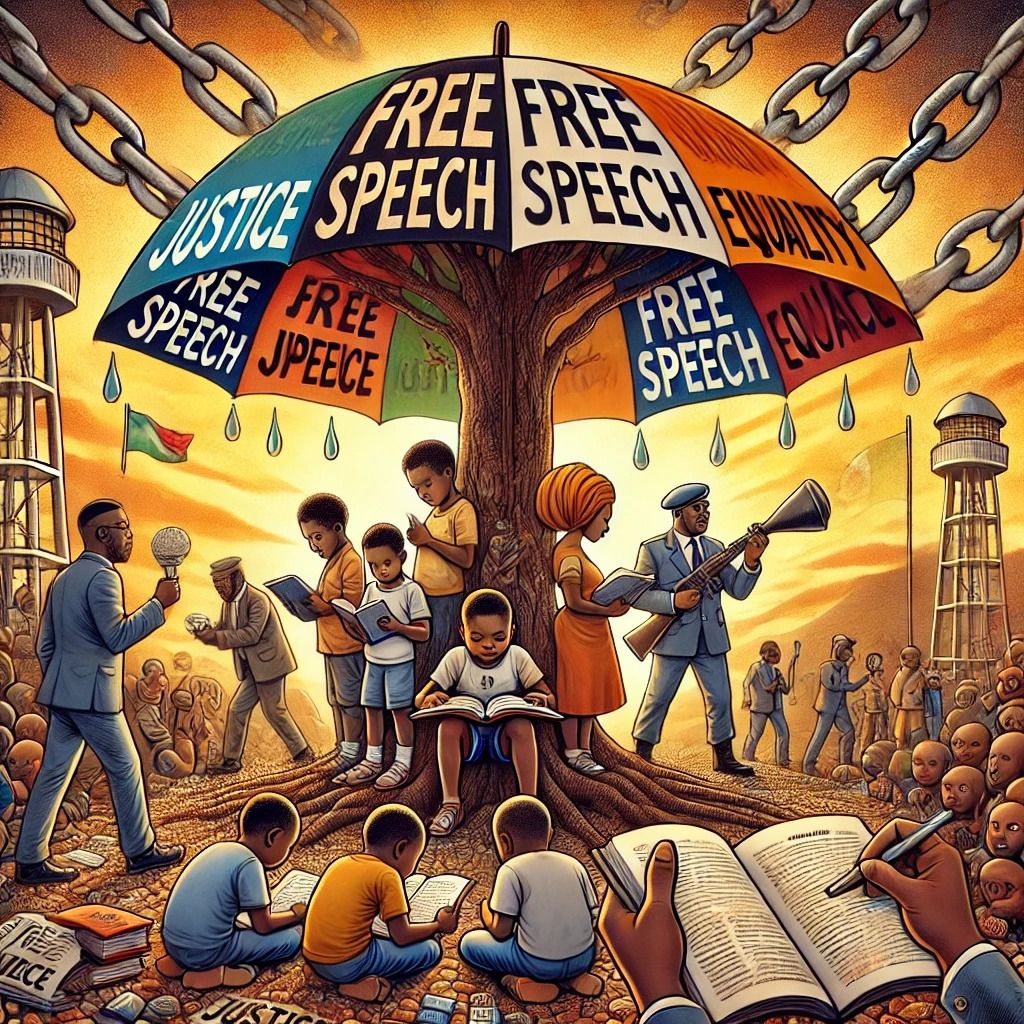
Since 1997, my advocacy has focused on building an egalitarian society where children can thrive. It is my conviction that preparing children for the future is not enough, must also prepare the future for our children. If the surest way to predict a bright or gloomy future is to create it, then our commitment to raising balanced and empowered children must be intricately connected to building a society founded on equality and justice. This foundational belief forms the basis of my advocacy and underscores the urgency of this piece.
The brazen kidnapping and extrajudicial detention of nation-building advocate Dele Farotimi highlight the troubling reality of free speech suppression in Nigeria. If a prominent voice like Farotimi can face such blatant disregard for the rule of law, what hope remains for ordinary Nigerians who dare to speak truth to power?
The current climate of fear and repression suggests that anyone is just one word, one article, or one comment away from having the police or judiciary weaponized against them. This troubling trend speaks volumes about the disposition of the political class toward free speech. The systemic erosion of this fundamental right cannot be addressed in isolation, as it reflects a broader disregard for democratic principles.
A Disturbing Pattern of Suppression
The case of bloggers Precious Eze and Olawale Olurotimi is emblematic of a growing trend where state and corporate powers are used to silence dissent. Detained since September 19, 2024, under charges of cyberbullying and conspiracy, allegedly influenced by Guaranty Trust Bank (GTBank), their ordeal highlights the misuse of public and private influence to criminalize free speech.
Similarly, Speed Darlington remains in custody following his arrest on November 27, 2024, over allegations of cyberstalking Grammy Award winner Burna Boy. Despite a Federal High Court granting him bail, his continued detention underscores the pervasive abuse of police authority and the judiciary.
These examples are not isolated incidents. Other recent cases include:
- Chioma Okoli: A private citizen detained for days after posting a critical review of a company’s tomato paste, a matter that should have been resolved civilly.
- Agba Jalingo: A journalist arrested and transported across state lines for publishing reports implicating a governor’s family member. His detention underscores the risks faced by investigative journalists.
- Achadu Gabriel Idibia: A journalist in Kaduna prosecuted for exposing poor leadership. The case repeatedly stalled due to lack of evidence, revealing its baseless nature.
- Apostle Niyi Peter: Prosecuted after allegedly defaming a gospel artist on social media. Instead of pursuing civil remedies, law enforcement was misused to escalate the matter.
- The Informant247 Journalists: Four reporters—Adisa-Jaji Azeez, Salihu Ayatullahi, Salihu Shola Taofeek, and Abdulrahman Taye Damilola—were charged with defamation and cybercrime after uncovering fraud allegations, demonstrating the dangers faced by media practitioners challenging corruption.
These cases illustrate a disturbing misuse of state institutions to intimidate critics, turning civil disputes into criminal matters. This systematic suppression of free speech undermines public trust and democratic processes while deepening societal inequalities.
A Global Contrast
While Nigeria clings to colonial-era defamation and cybercrime laws, other African nations are making significant strides in protecting free speech. Ghana, Kenya, and South Africa have decriminalized defamation, recognizing its incompatibility with democratic values. Similarly, Malawi’s courts have ruled that criminalizing free speech violates modern human rights frameworks.
Nigeria’s continued suppression of free expression is a glaring outlier in a continent striving for democratic progress.
A Path Forward: Protecting Free Expression
To safeguard democracy and secure a future where children can thrive, Nigeria must take urgent action:
- Decriminalize Defamation: Replace criminal sanctions with civil remedies to resolve disputes without the potential for abuse.
- Ensure Accountability: Hold law enforcement and judicial officers responsible for enabling misuse of power.
- Strengthen Protections: Enforce the laws that safeguard journalists, activists, and citizens who challenge corruption and injustice.
Conclusion
Silencing dissent does not erase the truth; it amplifies injustice. The ordeals of these individuals mentioned here and countless others serve as a clarion call for Nigerians to rise in defense of free speech and democracy.
Freedom of expression is not a privilege; it is a fundamental right. Upholding is not only a legal obligation but a moral imperative. Together, we must stand with those who dare to speak truth to power, affirming our collective commitment to justice, democracy, and a brighter future for all Nigerians
 Taiwo AKINLAMI