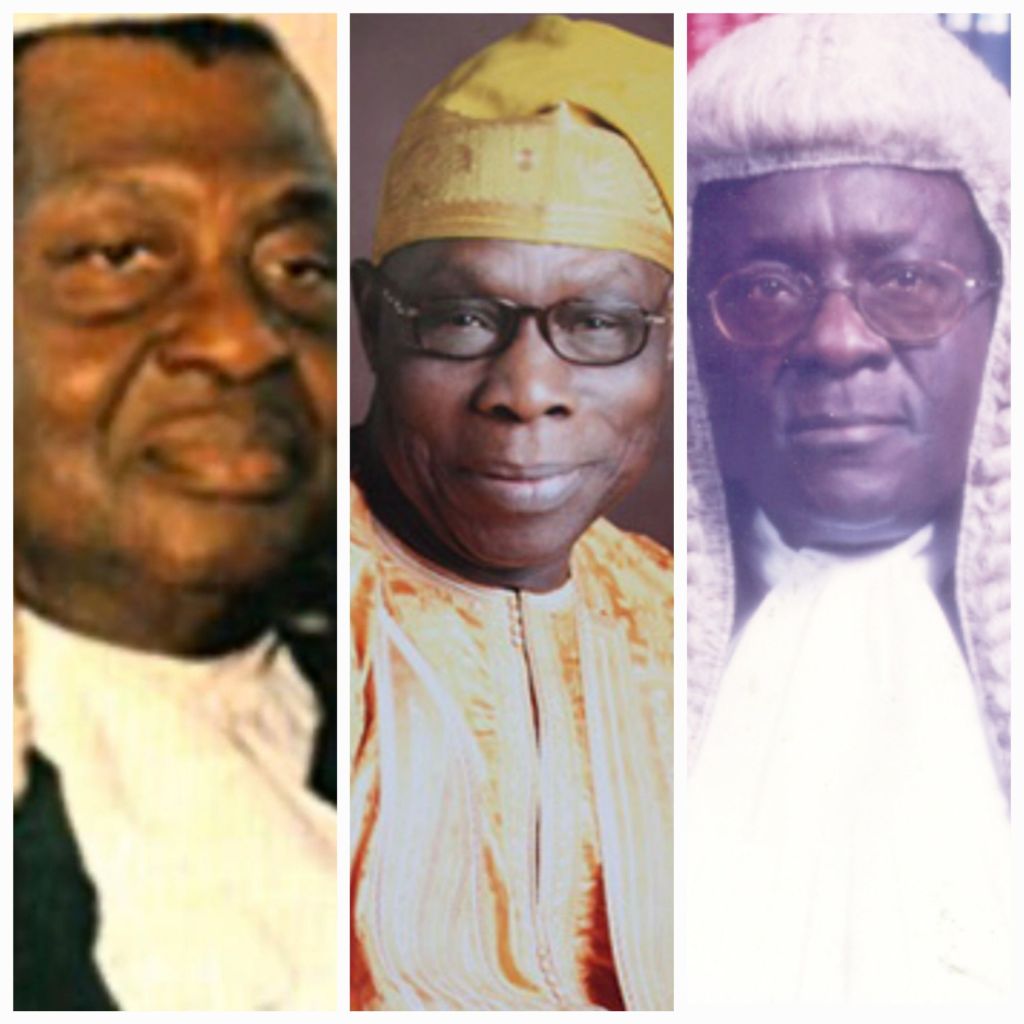
When I was in university, I had the privilege of learning the preliminaries of the Law of Torts under the esteemed Professor I.O. Smith. Among the many lessons he imparted, one that has stayed with me is his teaching on libel, particularly the defense of justification. To illustrate this concept, he referred to the famous case between Chief Rotimi Williams and Newswatch Magazine. This case remains etched in my memory, not only because of its legal significance but also due to the dramatic manner in which it unfolded.
In that case, Newswatch, represented by the legendary Chief Gani Fawehinmi, invoked the defense of justification. Fawehinmi, with his characteristic audacity, delved into Chief Rotimi Williams’ past and unearthed a series of unflattering details, including a 1949 case where Williams was accused of misappropriating a client’s funds. This revelation was pivotal, as Fawehinmi boldly proclaimed that the defense would substantiate every word, sentence, and punctuation in the publication. The courtroom was electric, and the sheer weight of the revelations caused the case to die a natural death. This case, which occurred in 1985, was a textbook example of how the defense of justification could be wielded with devastating precision.
Years later, another libel case would come to my attention, this time involving Chief Olusegun Obasanjo. During his campaign to become Secretary-General of the United Nations in 1991, Obasanjo filed a libel suit against the Campaign for Democracy (CD). This organization had openly criticized his candidacy, citing his past actions as reasons for his unsuitability for such a global role. As fate would have it, Fawehinmi was also involved in this case, defending the Campaign for Democracy with the same vigor he had shown in the Williams case. I was with my uncle, Chief Gani Fawehinmi, in court as he represented the Campaign for Democracy. I witnessed firsthand the legal battle and the dramatic proceedings. In court, Fawehinmi once again declared that every claim made in the defense would be proven word for word, sentence for sentence, punctuation for punctuation. It was a spectacle that mirrored the earlier case and served as a stark reminder of the power of the defense of justification. Like the Williams case, this legal battle ultimately died a natural death.
Additionally, it is worth noting another libel case involving Chief Olusegun Obasanjo. In May 2019, Obasanjo filed a ₦1 billion libel suit against The Punch newspaper and its columnist, Sonala Olumhense. The lawsuit was based on an article published on January 27, 2019, which Obasanjo claimed was defamatory and injurious to his reputation. However, in October 2023, the Federal Capital Territory High Court in Abuja dismissed the suit, awarding ₦2 million each to the defendants to cover their expenses.
Obasanjo later attempted to relist the case, asserting that his lawyer had withdrawn it without his authorization. In April 2024, the court rejected this request, ruling that a dismissed case could not be relisted. This case highlights the complexities of libel litigation and underscores the importance of precision in pursuing such claims.
Reflecting on these cases, I am reminded of George Bernard Shaw’s poignant observation: “The tragedy of history is that we do not learn from history.” These legal battles, though decades apart, share a common thread, the peril of casting stones while living in glass houses. Both Chief Rotimi Williams and Chief Olusegun Obasanjo, towering figures in their respective fields, sought to defend their reputations through the courts, only to have their pasts laid bare for all to see. The outcomes were not just legal defeats but public reckonings that underscored the enduring relevance of Fawehinmi’s courtroom mantra.
If these reputed men could not survive their reputations being put through the scrutiny of history, does this mean that reputable men in Nigeria, Africa, and across the globe must be careful about how they assert claims to reputation, honor, and dignity? Would it not be wise to say that sometimes, supposedly reputed men should learn to allow sleeping dogs to lie? When they invite scrutiny by filing such cases, they risk bringing themselves into situations where the results become self-inflicted dilemmas—like the Yoruba saying: when one is in a situation where a matter “farts” in one’s mouth and is accompanied by salt, the fart cannot be swallowed, and the salt cannot be spat out. It is sad when this becomes a self-inflicted dilemma or quandary.
In today’s world, the lessons from these cases are more relevant than ever. As public figures and private individuals alike navigate the murky waters of reputation and accountability, they would do well to remember that transparency is a double-edged sword. Those who live in glass houses must indeed be careful how they throw stones.
History has a way of repeating itself, often with painful precision. The tragedy, as Shaw aptly noted, is that we rarely heed its lessons. Let these cases serve as a cautionary tale, not just for those in positions of power but for all of us. The defense of justification is not merely a legal doctrine; it is a reflection of the fundamental truth that actions have consequences, and those consequences, whether immediate or delayed, are inescapable.
As we step into a new week with our loved ones, we should remember to impart valuable life lessons to our precious children. Teaching them to prioritize character over reputation and be mindful of their actions. Encourage them to learn from past mistakes and respond thoughtfully to criticism, avoiding the reopening of old wounds. Wishing us a wonderful week ahead!”
Do have an INSPIRED week ahead with the family.
 Taiwo AKINLAMI