HomilyfromthePew
“When the righteous are in authority, the people rejoice: but when the wicked beareth rule, the people mourn.” Proverbs 29:2
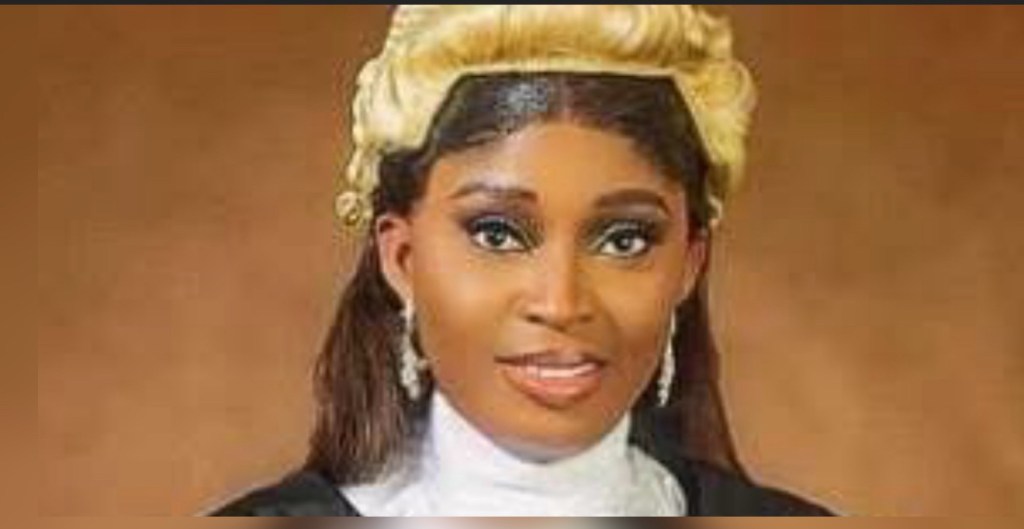
A Personal Memory, A National Tragedy
I was 29 when I was called to the Nigerian Bar on September 28, 1999, in Abuja. We were the first set to attend law school in Abuja and to be called there. I still remember the long journeys from Abuja to Lagos—the night buses, the exhaustion, the silence of broken-down vehicles in the middle of the bush.
Those memories came flooding back this week as news broke that Nigeria’s newest lawyers, fresh from the Call to Bar, were kidnapped on those same treacherous highways. I know both the exhilaration of being newly robed and the vulnerability of traveling those roads. That is why these abductions strike at the heart of our national shame.
From Celebration to Captivity
The Call to Bar ceremony is supposed to be a moment of triumph. It crowns years of sacrifice, study, and determination. Parents beam, families rejoice, and the legal profession welcomes new custodians of justice, custodians the nation itself desperately needs.
This year, that joy was cruelly interrupted.
The first story to break was that of Ms. Onyesom Peace Udoka, called to the Bar on September 23, 2025. Just four days later, traveling with her sister near Lokoja, she was abducted. Reports suggest kidnappers disguised in uniforms stopped their vehicle not far from security checkpoints. A ransom of ₦20 million was demanded.
Almost simultaneously, on the Okene–Auchi expressway, a commercial bus was ambushed. Twelve passengers were seized, among them several newly called lawyers heading home to Edo State. Eight, including the driver, were later rescued. But four remain missing, with kidnappers reportedly demanding ₦100 million per head.
Not Random Victims
The symbolism is chilling. These are not anonymous travelers. They are Nigeria’s newest lawyers, freshly sworn to uphold justice and defend the vulnerable. That they themselves have become prey underscores the depth of our crisis.
If those sworn to defend the law are unsafe on Nigerian highways, what hope remains for the rest of us?
Nor is this the first time. In August 2025, five students of the Nigerian Law School, Yola campus, were abducted along the Wukari–Zaki-Biam expressway and held for six days, released only after ransom payments. Another student, David Obiora, recounted how he and five others were kidnapped on the Zakibiam–Mukari road and freed only after paying ₦10 million each, without any role by security agencies.
These young professionals are often children of humble families, hewers of wood, drawers of water, whose parents braved punishing economic conditions to see them through school. They know the dangers of Nigerian highways but have no alternative. Those who can afford air travel avoid the roads altogether. But how are struggling families expected to raise ₦20 million or ₦100 million for ransom?
Government’s Primary Duty
The 1999 Constitution, though flawed, is clear: “The security and welfare of the people shall be the primary purpose of government.”
A nation fails when that duty collapses. Today, the spate of kidnappings and killings across Nigeria is proof that our nation has kissed the canvas. Billions are allocated annually to security, yet ordinary Nigerians, citizens in name only, stripped of the dividends of citizenship, cannot travel freely. Highways remain killing fields, and kidnappers operate with impunity, sometimes within sight of checkpoints. What then are security operatives doing defeated? Where is the state comatose?
Silence Is Not an Option
The Nigerian Bar Association (NBA) must not stay quiet. A threat to lawyers is a threat to justice itself. This is the time for institutional voice, not muted concern. The NBA must pressure federal and state governments, not only to secure the release of these abducted lawyers but also to demand systemic reforms.
But this responsibility does not rest on the NBA alone. Every citizen must raise their voice. In moments like this, the people have the right, and indeed the duty, to demand change by all peaceful means necessary. Nigeria belongs to us all. We cannot surrender her to kidnappers and bandits while those who claim to lead us feast in sheltered state houses, immune from the daily anguish of the governed.
A Moral Imperative
Kidnapping has become a business. ₦20 million here, ₦100 million there, lives reduced to price tags. When newly sworn lawyers, symbols of hope and justice, are commodified this way, the indictment is total.
This is no longer about isolated crimes. It is about the survival of a nation. To allow this cycle to continue is to endorse anarchy.
A Call to Action
The release of Ms. Onyesom Peace Udoka, her sister, and the lawyers taken on the Okene–Auchi road is non-negotiable. But their release alone will not solve the problem.
Nigeria needs:
• Stronger highway patrols with technology-driven monitoring.
• Accountability at checkpoints, where complicity too often hides.
• Dismantling of kidnap networks that have turned roads into hunting grounds.
• Transparency in government security expenditure, to ensure funds serve the people, not private pockets.
Failing the Brightest
For the families, the fear is immediate and raw. For the profession, the injury is symbolic. For the nation, it is an indictment.
The Call to Bar should be a gateway into service, not a passage into captivity. Until these young lawyers return safely, Nigeria must face a painful truth: we are failing our brightest, and in failing them, we fail ourselves.
Until then, when the system designed to protect them has failed, we may commit them to God’s mercy. But it is unjust to assign God an extra burden to do what He has already empowered man to do.
 Taiwo AKINLAMI