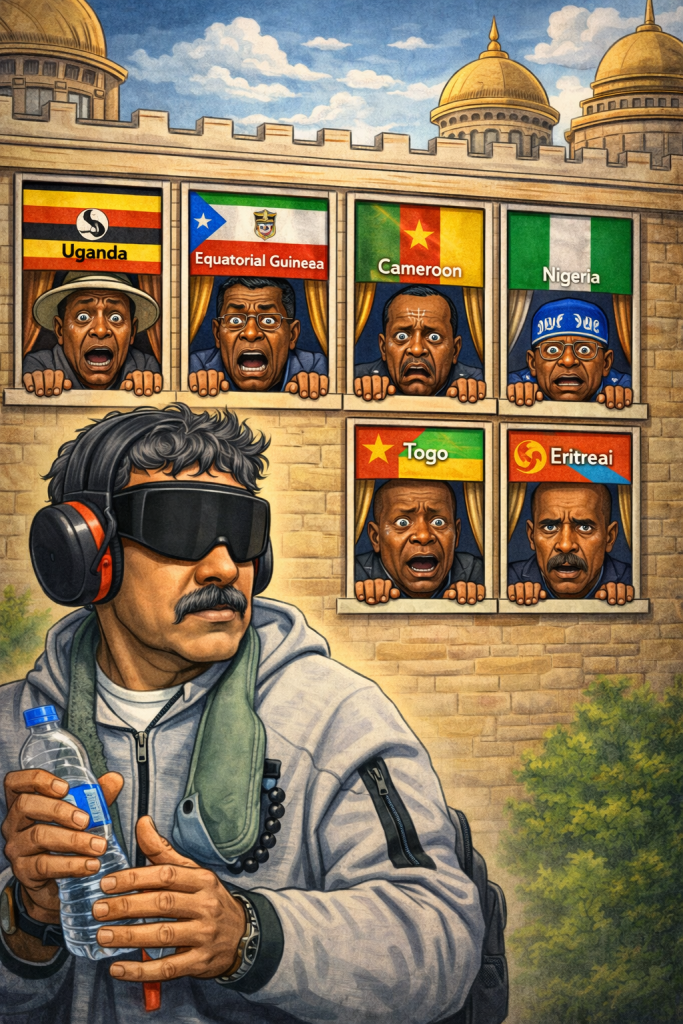
Maduro ruled with an iron fist and a ruthless grip on power, rigging elections while preaching democratic legitimacy.
According to Reuters.com: “His rule became best known for allegedly rigged elections, food shortages and rights abuses, including harsh crackdowns on protests in 2014 and 2017. Millions of Venezuelans emigrated abroad.”
Under his watch, poverty became an emblem of statehood; citizenship, a punchline. He subdued the people, crushed opposition, sometimes lethally, and weaponized poverty and hardship as tools of control. He assumed he knew his people well enough to keep them permanently powerless.
But the more anti-people he became, the more he isolated himself; and the more he isolated himself, the more powerless he became.
He did not recognise that powerlessness, because the greatest power is the power of the people and that is the power now celebrating his removal across the globe.
And if anyone thinks this misadventure is new, the Old Testament answers: it is not. Rehoboam, Solomon’s son, ascended the throne and mistook harshness for strength. When the people pleaded for relief, he chose arrogance over wisdom and promised heavier burdens (1 Kings 12:1–20; 2 Chronicles 10:1–19). The kingdom fractured. Then came the external consequence: Egypt’s King Shishak invaded and stripped Jerusalem of its treasures (1 Kings 14:25–26; 2 Chronicles 12:1–12).
The lesson is ancient, but stubborn leaders keep learning it late: estrange the people, weaken the nation from within, and you invite affliction from without. These may include but not limited to being designated “countries of concern,” “disgraced countries,” in visa bans and immigration restrictions, in pariah treatment across borders, in passports that become albatrosses, and in social and political destinies cooked in instability.
Some dictators, especially those who manipulate the electoral process, who introduce “glitches” and then taunt the people to “go to court” are sleepless tonight. But will sleeplessness teach them the central truth: when you lose the people, you lose all, no matter who praises you, you are exposed.
Exposed to what exactly?
We do not know just as we did not know, in advance, what Maduro himself would be exposed to.
When a heartless political class, fronted by obstinate leaders, rides roughshod over the rights of its people and suppresses their collective destiny, it should remember: Adìyẹ bá l’ókùn; ara ò rọ̀ okùn; ara ò rọ̀ adìyẹ. When the chicken perches on the rope, neither rope nor chicken rests. Reckless power unsettles everyone, including the one wielding it. And when that recklessness invites foreign intervention, it sends a people on a long journey of near-endless uncertainty.
A society designed to exist without civil society, the conscience of the nation has already dug and sealed its own grave.
We can condemn foreign intervention all we want, but we should not forget: Tí ògiri ò bá lá’nu, aláǹgbá ò lè ráyè wọ̀ ọ́. If the wall has no opening, the lizard cannot enter. External intrusion is often enabled by internal failure.
As my grandmother would say: Ẹni tó sọ́ ló pè eṣinṣin, the one who farted invited the flies and cannot dictate how far the flies can go. Whoever creates the stench invites consequences beyond their control.
Now the world that was silent during his rule, the world that “did not complain” is being summoned to speak up about his removal. But nature does not tolerate a vacuum. When people are rabidly disempowered, civil society crushed, and opposition parties neutralised, something will give, one way or the other.
The message is clear: dictators who wear the cloak of democratic rule, especially those who add crime to their portfolio, including drug-lordship, beware. There may just be a new sheriff in town, and a new kind of affliction added to your cart as you shop greedily and surreptitiously in the dark web of political and social manipulation.
Ẹ̀yin alágbára Áfíríkà, ẹ má rọ̀ ra ilé ń yọ.
 Taiwo AKINLAMI