#HomilyFromThePew
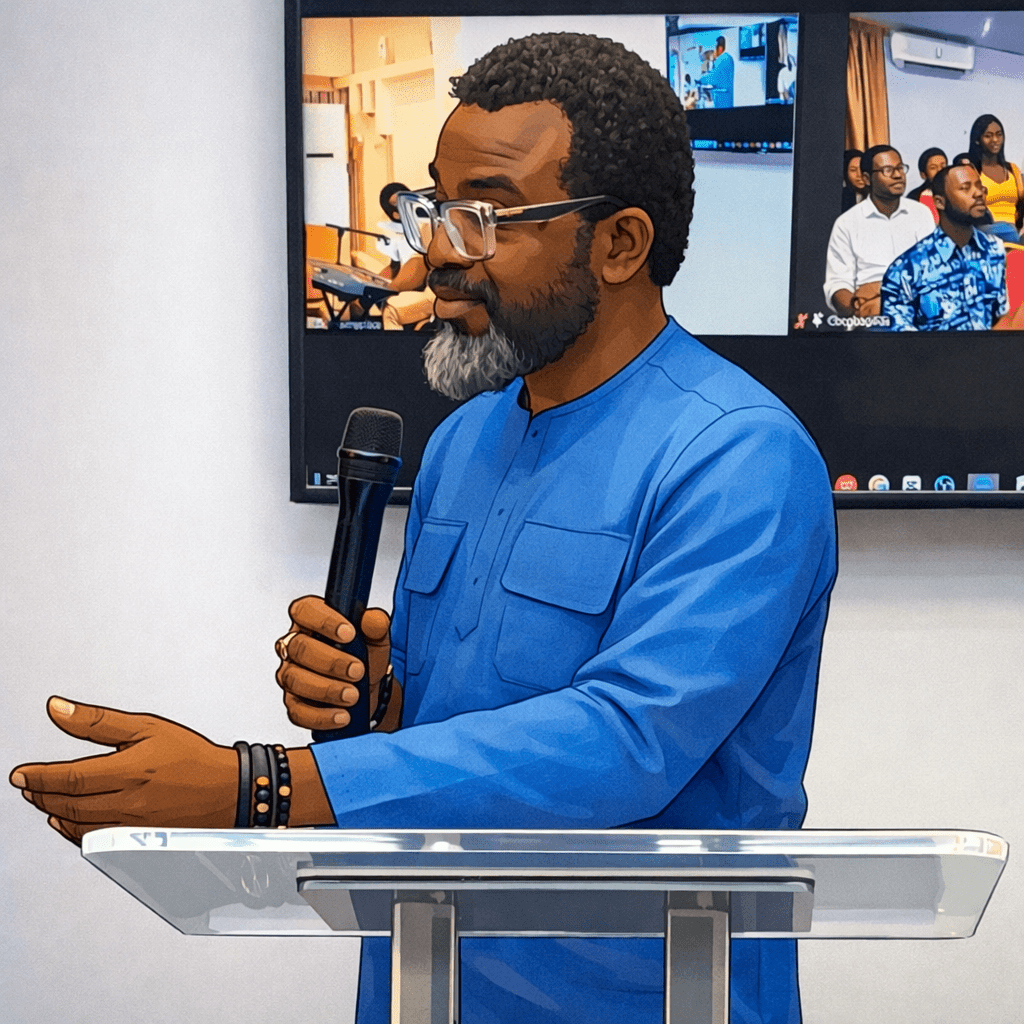
My umbilical cord was buried in Lagos at LUTH, Idi-Araba. That means something to me. Scripture says that God “determined our appointed times and the boundaries of our habitation” (Acts 17:26). Nigeria is my country. I did not choose Nigeria; Nigeria chose me. God, who makes no mistakes, made that choice.
Because of that, my heart beats for the welfare of this nation and its greatly endowed and resourced people. I understand Nehemiah’s burden, the man who, though far from home, could not ignore the broken walls of his people (Nehemiah 1:3–4). No one who truly loves Nigeria can be at peace watching her continue in her present state.
To say “all is well” today is either ignorance, denial, convenience, or the posture of active or passive beneficiaries of the putrefying decay. The evidence is plain. To suggest that our nation’s security, education, healthcare, social services, social protection, infrastructure, and human development are merely struggling would be an understatement. Nigeria is failing across nearly all indices of human and national development, earning the ignoble label of the world’s poverty capital and, more recently, being designated a nation of particular concern, quickly christened by many as a disgraced country.
These failures translate into losses, some conscious, many unconscious. Nigeria has happened to all of us, one way or another. The common denominator is not merely our individual experiences, but the plague of selfish, greedy leadership, and the even greater disaster of a silent, or silenced, majority of the people.
Nigeria happened to me. I lost my mother under avoidable circumstances at LUTH, Idi-Araba. In that pain, I find myself able to feel at least in part the grief of Chimamanda Ngozi Adichie, who lost her 21-month-old son in circumstances that echo similar failures.
I have lived under the constant threat of armed robbery and ritual violence. I studied law at Lagos State University, through court injunction, where institutional injustice nearly ended my journey until the judiciary intervened and upheld what was right.
That is the paradox of Nigeria: deep wounds, yet undeniable light.
There is hardly any Nigerian who does not have a story of pain. Yet there is also hardly any Nigerian who has not tasted something good, no matter how minute, from this land, not necessarily by the deliberate intention or careful curation of our rulers, but through the blessings of nature. We are richly endowed with land, weather, and resources, and largely spared the devastations of natural disasters. Yet these blessings have too often become our undoing, feeding the greed of our rulers instead of advancing the common good, and leaving our natural resources unmanaged, wasted, or brazenly stolen.
Still, I believe Nigeria’s greatest resource is her people.
The most meaningful connections of my life came through Nigerians, teachers who shaped me in primary and secondary school; lecturers who opened my mind at university; professionals who stood on principle. Great Nigerians exist here: incorruptible lawyers and doctors, principled teachers, ethical financiers, musicians of conscience, behavioural scientists, parenting and child-safeguarding experts, even politicians who have refused to bow to corruption.
These are our Daniels, men and women who “resolved not to defile themselves” (Daniel 1:8). They live among us. They are not fewer than the rest who relish in plundering our commonwealth.
But they have stayed too long in the background.
It is time for the best of us to step forward. It is time for the worst of us to stop ruling the best of us.
I reject the lie that committed Nigerians are a small minority. I remember Elijah’s despair when he told God, “I alone am left,” and God replied, “I have reserved for myself seven thousand who have not bowed the knee to Baal” (1 Kings 19:18). The problem is not numbers; it is silence.
It is the mindset that our nation is irredeemable, the belief that the rot is too deep, that the decay is too entrenched, and that nothing meaningful can be done. This narrative has been sold to us by the few who dominate the many, sustained by the illusion of their invincibility. Yet that so-called invincibility is nothing more than our refusal to act, our resignation to fate, our withdrawal into helplessness, our quiet acceptance that things must remain as they are.
Elijah himself once believed that Ahab and Jezebel were more powerful than they truly were. But he learned that their threats were empty. What was required was not retreat, but resolve, Elijah had to rise, do the needful, and liberate his mind from the intimidation of Jezebel’s voice.
We cannot continue as a silent majority. Our salvation as a nation will not come from a few who seized power, but from the many who must now organize, peacefully, strategically, courageously.
As my dear brother and friend, Dele Farotimi, has often said, we must stop bellyaching and decide to move our nation forward. We must stop agonizing and start organizing.
This will require alliances across professions, ethnicities, languages, and ideologies, bound by a shared commitment to the welfare of the people. It will require raising a new generation of children. It will require adults who believe that a new Nigeria is possible within our lifetime.
This is liberation theology in practice. While we pray to God, God is calling on us. While we wait on God, God is waiting on us. Scripture is clear: God heals people; healed people heal nations.
It is time for the healers to rise and rescue our country from the killers, not with violence, but with courage, conscience, and coordinated action; first by conscientizing ourselves that change is an ever-present possibility for those willing to take responsibility, define the path, and pay the sacrifice.
By all peaceful means necessary, let the best of us step forward and lead the rest of us.
Do have an inspired week ahead with your family.
 Taiwo AKINLAMI