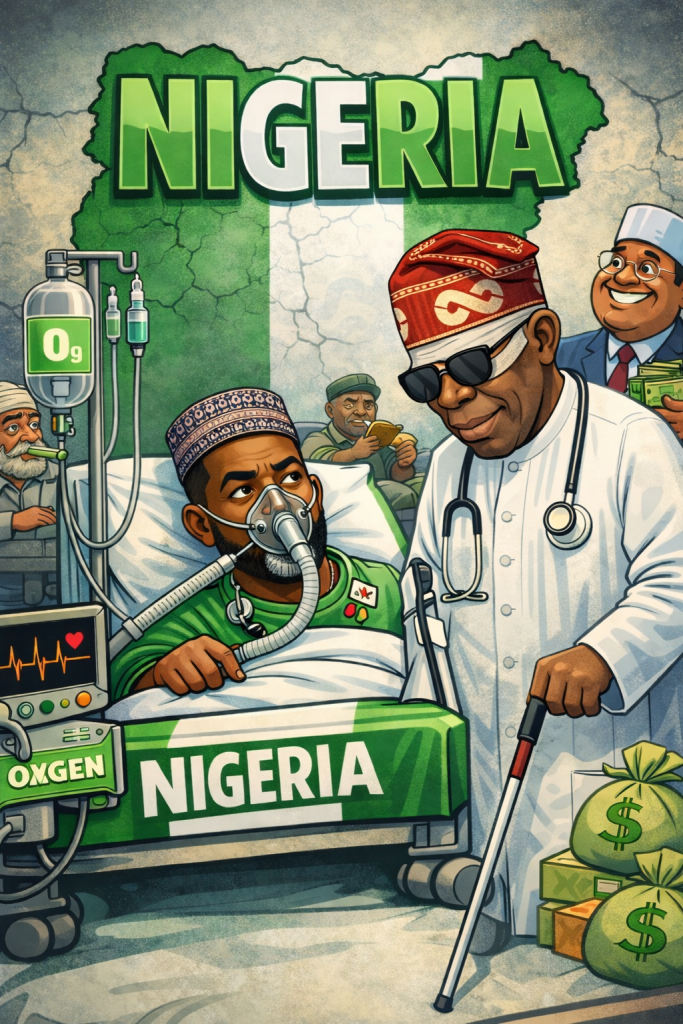
When a body is unwell, it announces itself. Symptoms do not float in the air; they land somewhere specific, headache, stomach ache, fever signals that something deeper needs attention. Nations are similar. The true health of a country is not primarily measured by GDP or concrete. It is measured by civic values: what the public applauds, what it excuses, what it demands accountability for, and what it allows to pass as “normal.”
In that sense, Reno Omokri is less a standalone controversy and more a case study, an unusually clear symptom of Nigeria’s weakened civic immune system.
When “proof” becomes disposable
On January 28, 2026, a Federal High Court in Abuja, in the Federal Government’s cybercrime case against Omoyele Sowore, reportedly admitted as evidence a video clip of Reno Omokri calling President Bola Tinubu a “drug lord,” with Omokri in that clip asserting that he had documents, an important detail because it was presented as researched certainty, not casual commentary..
Immediately after the clip resurfaced in court, Omokri’s public response was not “here is what changed in the facts,” but that withdrawn statements cannot be relied upon to establish truth in another person’s case.
It is not illegal to retract. People can reassess. But a society should be alarmed when a public figure moves from “I investigated; I have documents” to “that was withdrawn; it shouldn’t count,” without offering the kind of transparent accounting that serious claims require. Retraction without reckoning is not maturity; it is a loophole. And when loopholes become culture, national life becomes theatre, where yesterday’s certainty is not corrected by better evidence but erased by convenience.
The “Christian genocide” U-turn and the witness who embarrassed the host
This pattern is even clearer in the “Christian genocide” debate.
First, Omokri has past public posts still visible online where he used the language of “genocide of Christians in Nigeria.” For example, in a January 29, 2017 post on X (then Twitter), he wrote: “Their voice is so LOUD condemning ‘injustice’ against Muslims in USA yet very SILENT in condemning genocide of Christians in Nigeria!”
Fast-forward to October 2025: Omokri re-emerged as an aggressive opponent of the genocide framing, dismissing claims of a “Christian genocide” in Nigeria as “ludicrous” and “based on misinformation” in an Arise TV report of his remarks.
Then came the escalation: Omokri held a press briefing in Abuja featuring Mike Arnold, identified by Premium Times as a former mayor of Blanco, Texas, and founder of Africa Arise International. The framing of such a briefing is straightforward: you do not invite a “fact-finder” to your podium unless you want his presence to validate your position.
But in the same public dispute, Arnold insisted the situation amounts to genocide against Christian communities, directly contradicting Omokri’s messaging. And the dispute escalated further: Arnold publicly accused Omokri of deception and described him as a “pathological liar,” according to Ripples Nigeria’s report of Arnold’s statements.
That moment is not merely “Reno being Reno.” It is Nigeria being Nigeria.
Because in a healthier polity, a public figure who stages a credibility event, then gets contradicted and denounced by his own showcased witness, faces immediate consequences: serious scrutiny, reputational cost, and a demand for a full explanation. In Nigeria, the cycle often resets quickly. Public memory is short; performance fills the gap.
And the reset is visible. Within days of that October 2025 controversy, Omokri’s own social media accounts carried widely shared “moral lesson” content, such as his post advising Nigerians to look at the phone Aliko Dangote was using as an argument against lavish spending on expensive phones. The point is not whether the phone lesson is right or wrong. The point is the ease with which a public figure can jump from major national-security narrative battles to fresh moral instruction, without the society insisting on closure, accountability, or clarity.
Nigeria’s deeper problem: incentives
The scandal is not simply that a commentator changes his mind. People can change. The scandal is the incentive structure Nigeria repeatedly rewards:
✅A man can speak with absolute certainty, claim evidence, and mobilise public opinion.
✅He can later reverse himself, or reposition, without providing the evidentiary bridge that honest reversals require.
✅And the system, political, social, and sometimes institutional still leaves room for him to remain relevant, influential, and celebrated by the faction that finds him useful.
That is civic sickness: when “usefulness” becomes a substitute for truth, and loyalty to camp becomes more important than loyalty to principle.
The audience is part of the diagnosis
Symptoms are valuable because they force diagnosis. If Omokri is a symptom, then the patient is not Omokri alone; the patient is Nigeria’s civic culture, especially the parts of it that reward performance over responsibility.
✅Who amplifies sweeping claims because they flatter a side?
✅Who excuses reversals because the reverser has become “our person”?
✅Who stops asking basic questions once power smiles in a new direction?
A society that cannot sustain moral memory, what was said, how it was said, and with what claimed evidence will keep producing (and recycling) the same kind of public actor. Not because they are uniquely powerful, but because the ecosystem is built for them.
What healing would require
National healing does not start with banning voices. It starts with civic discipline:
✅Receipts must come with responsibility. If you claim documents, you owe the public clarity, especially when you change your posture.
✅Consequences must be real. Not vengeance, accountability. Credibility should be earned and kept, not reinvented at will.
✅Followers must become citizens. Nigerians must stop outsourcing judgment to tribal convenience.
Reno Omokri may be polarising, but he is not the main story. The main story is what Nigeria has become comfortable with.
Because when a nation is truly healthy, symptoms do not become a lifestyle. They become warnings, taken seriously before the illness becomes irreversible.
Do have an INSPIRED rest of the week with the family.
 Taiwo AKINLAMI