HomilyFromthePew
Today I stand on the pew where I am anointed to preach the theology of liberation, the liberation of the souls of men and women to see their inevitable roles in their own salvation. It is called the #MinistryofClarity.
It is a ministry that places clarity before action, personal, corporate, private, public, social, or political. It is a ministry that is interested in the connection between God’s will and human action, private or public.
For example, when God says, “With long life will I satisfy him, and show him my salvation” (Psalm 91:16), and we find that the countries with the highest life expectancy are politically and economically developed countries with near impeccable social services, while those with the lowest life expectancy are the nations without the foregoing, does that not mean that the promised long life in the Bible is tied largely to the state of the nation in which you live?
Another example: the most prosperous nations on earth are the nations with the most prosperous people, whose countries have created an enabling environment through social and economic policies; while the poorest nations on earth are the nations with the poorest people, where the nation has not an iota of contribution to the people’s hopes, yearnings, and aspirations.
Warren Buffet was once asked the secret of his sustained wealth; he said it was foundationally because he was born an American.
Yet the Bible promises prosperity to all (Deuteronomy 8:18; Joshua 1:8; Psalm 1:1–3; Proverbs 10:22; 3 John 1:2). But the machinery to the prosperity of the majority primarily is an inevitable combination of personal and corporate efforts.
This is the light in which I view my theology, insisting that the promises of Scripture are more corporate than personal. The promises speak more to stewardship than they speak to ownership (Psalm 24:1; 1 Corinthians 4:2; Luke 16:10–12; 1 Peter 4:10).
My people corroborated this: “Ọlówó kan ní àárín igbà òtòsì, òtòsì ni òun náà.” (One wealthy man in the midst of a community of the poor is defined and drowned by the poverty of the community.)
It is in the light of the foregoing that I lament the state of our nation for our organized actions.
It is in the light of this that I lament the impunity in our nation as our collective undoing. The real village people who hinder our collective progress is the impunity we have collectively built and now pour libation on, in awe and worship. Please note: we are our leaders, and our leaders are us.
What we are yet to observe is that impunity has seeped into every part of our lives as Nigerians and Africans. In our personal and corporate lives, in our private organizations, and in our public lives, impunity is in the air. We have small oppressors and chief oppressors. They are all small men and women in power, busy abusing those in public office, yet practicing impunity in their private lives, dominating those who are under their care in whatever capacity, and making life unbearable for them.
Another form of impunity is when officials of government, like a minister of the Federal Republic of Nigeria are now alleged to be using official and political power, through the Nigerian Police and other state apparatus, to oppress a woman to whom he had owed millions of naira since 2015, with another allegation of sexual harassment, culminating in locking up the woman in the police cell for days until fighters led by the irrepresible Omoyele Sowore stepped in and brought required relief to the woman, whom police, after a court order releasing her, were ready to detain her dead body.
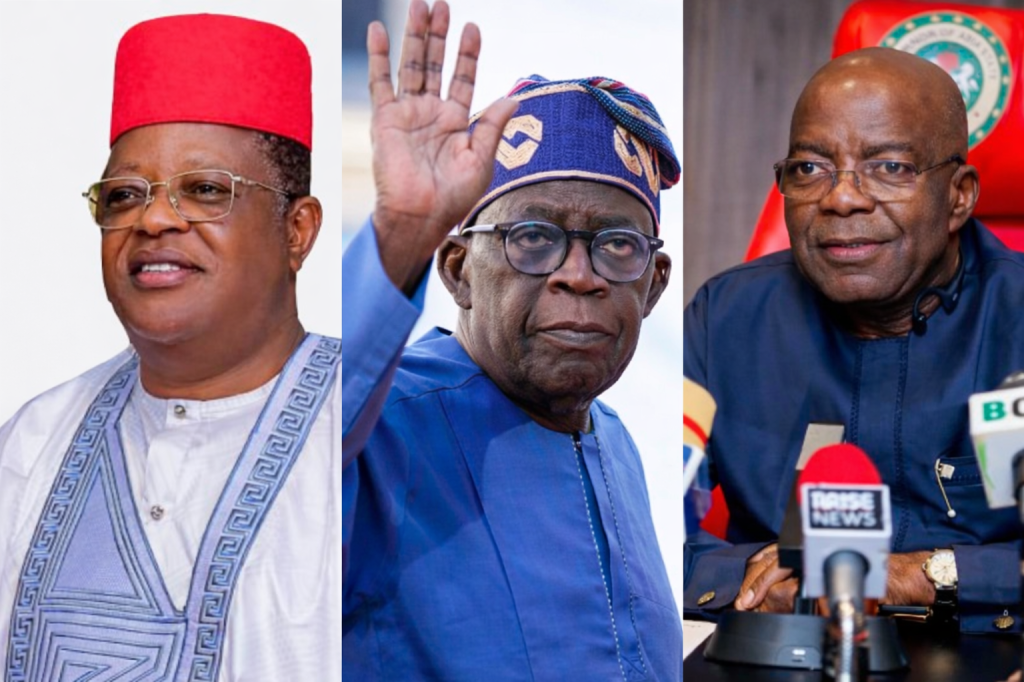
David Nweze Umahi, Federal Minister of Works, comes across to me, as I have observed him via his public conduct as very arrogant and lacking the comportment of a public officer.
He is too loquacious that he does not make sense. He is in the midst of many controversies to which he does not care to provide any sensible explanation to Nigerians.
He is of the typical stock of the political class: he does not care what the people think because the people are not a factor in his ascendancy to power. Yet his reading of the people is right. His existence is the fruit of our indecision.
Then enters Alex Otti of Abia State: on February 27, 2026, he launched a virulent verbal attack on a journalist during a live monthly media chat in Umuahia.
Chika Nwabueze reportedly requested data on how policies have directly improved living conditions, rather than just infrastructure. Governor Otti responded by labeling the question “irresponsible” and telling the reporter to “shut up.” 
Impunity at work. This is not unbecoming of public officers: to treat the fourth estate of the realm as scum, wretched of the earth who do not deserve any modicum of respect. The other day it was Femi Fani-Kayode; now it is a governor being held accountable by the media.
Yet all of these are old news, Umahi and Otti, yet old news still make headlines; another sign of our backwardness and our withdrawal to fate, and a nation that blesses impunity: headline, complain, and go to bed, for another one to occur.
I just hope that by virtue of us peacefully organizing ourselves to give expression to our right to determination, through voting and other peaceful and constitutional means, there shall be another news, this time fresh, the type we have never experienced or read and it is: “The Nigerian People are Finally in Power and their Welfare and Security has Become the Primary Aims of Government.” Shalom!
Do have an INSPIRED week ahead with the family.
 Taiwo AKINLAMI