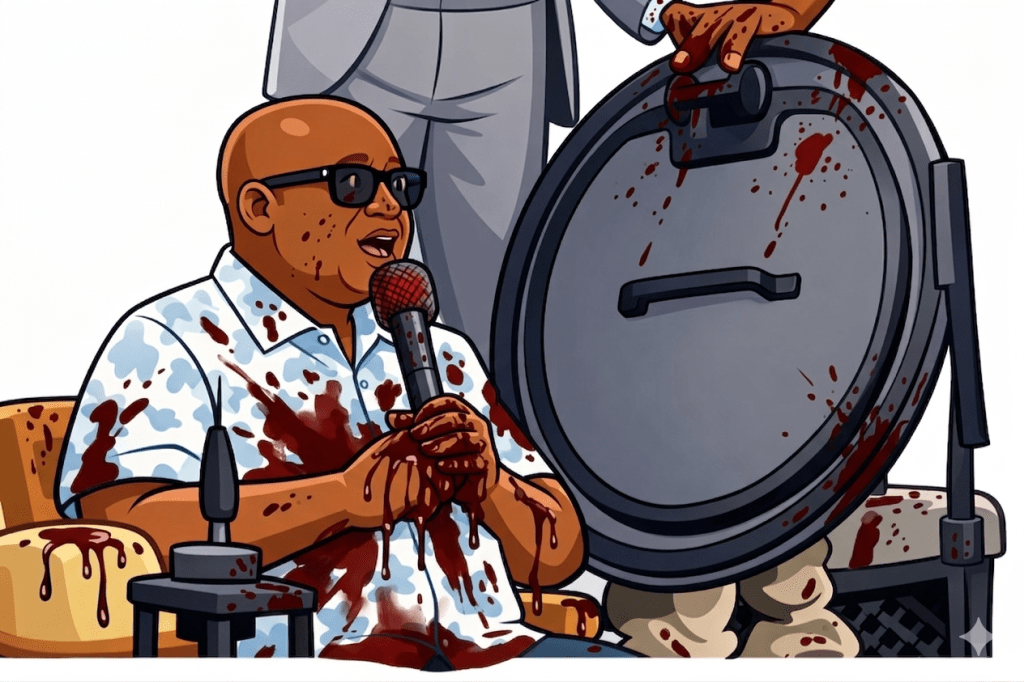
I write #50PlusDad every Monday. Yesterday, I could not.
The news of the massacre in Jos, Nigeria, left me unable to proceed as usual. My humanity was shattered and diminished once again. Death is certain, but avoidable massacre is not. Where there is respect for human life, and where government truly understands that the welfare and security of the people shall be its primary purpose, such horrors should not become routine.
Men, women, and children, including a pregnant woman, were reportedly murdered in cold blood. I had intended to write on another subject, but as a father, I could not in good conscience move on as though nothing had happened.
One question has stayed with me since then: When will this killing stop?
What makes this even more disturbing is the backdrop against which it happened. We have heard senior officials speak of terrorists as “prodigal sons” who should be spared and reintegrated into society. That position is morally bankrupt if it is not matched by a clear, credible, and urgent plan to protect innocent lives.
As a father, I found no rest. I thought of husbands who lost their wives, wives who lost their husbands, parents who lost their children, children who lost their parents, and elderly parents who lost their grown children. I thought of the pain, the terror, and the permanent emptiness such violence leaves behind.
That is why I could not write the kind of inspirational piece I would normally write on Mondays. It would have been false to the moment.
Then came the now-familiar theatre of official response: the governor arriving at the scene heavily fortified, protected, and insulated from the very insecurity ordinary citizens are expected to endure without complaint. Some have called this insensitivity. That word is too weak. Callousness is too weak. Even wickedness seems inadequate.
When a governor cannot visit grieving citizens except in an armoured cocoon, one fact is laid bare: the state knows the people are unsafe.
So where do we go from here?
At this point, it is difficult to avoid the conclusion that the Nigerian state lacks the will to solve the insecurity crisis. And now, with 2027 already looming over public life, the ruling political class appears increasingly consumed by re-election calculations rather than the immediate duty of preserving life.
Still, one truth remains: the day of judgment for the perpetrators of these crimes, their enablers, and the system that allows them to thrive will not be postponed forever.
The people, however, must also act. Not through lawlessness. Not through despair. But through consciousness, organisation, mobilisation, and peaceful resistance. We must find credible ways to make our voices heard, as recommended in The Imperative of the Nigerian Revolution by Dele Farotimi.
I write today not because there is something new to say, but because almost everything that needs to be said about insecurity in Nigeria has already been said. The strategies have been proposed. The analyses have been made. The warnings have been issued. Nothing I write today is new.
But sometimes the task is not to say something new. Sometimes the task is to say, once again, with clarity and moral urgency, that a people cannot continue to pay for governance with their lives.
The people must organise. They must stop agonising and start mobilising. They must peacefully and credibly demand safety, justice, and accountability.
Because when the souls of citizens become the price of governance, resistance becomes a moral duty.
In honour of those whose lives were avoidably cut short in Jos, I suspend this week’s #50PlusDad. I will return next week, God willing.
 Taiwo AKINLAMI