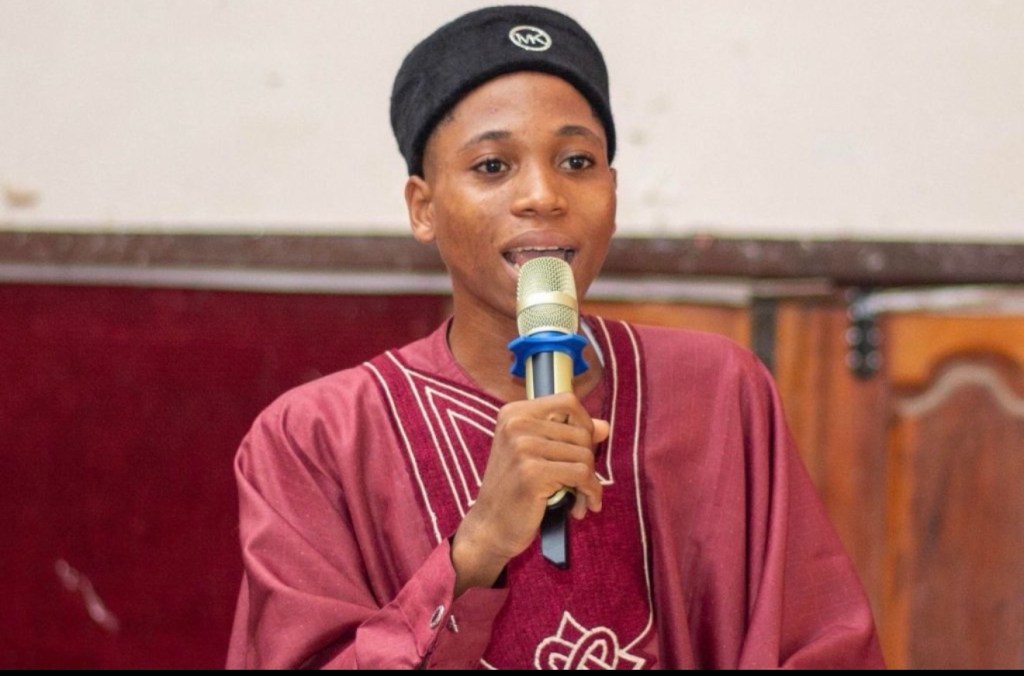
The story is about the newly elected Students’ Union Government President of Adekunle Ajasin University, Akungba-Akoko, Ondo State, Folagbade Greatness Ayoola, who reportedly appointed about 40 aides and special advisers shortly after assuming office.
The appointments include offices such as Chief of Staff, Deputy Chief of Staff, Secretary, Chief Press Secretary, Personal Assistants, Directors, and Special Advisers covering strategy, logistics, academic affairs, health services, union projects, social media, women affairs, transportation, sports, finance, ICT, security, religious affairs, and students’ welfare.
For example, what is the necessity of offices such as Aide-de-Camp, Chief of Staff, and Deputy Chief of Staff in a one-year, part-time students’ union administration? What staff are being managed? What student-welfare crisis do these titles solve? Or are they simply borrowed symbols of bureaucracy and wastage from our larger political culture?
The story has attracted attention because the structure mirrors the appointment culture of political office holders in Nigeria. It raises serious questions about leadership culture, administrative necessity, and the growing imitation of government bureaucracy within student union politics.
I was a students’ union leader in the 90s. I served as Director of Welfare under one of the most progressive and effective presidents Lagos State University Students’ Union ever had, Dele Farotimi.
From that experience, I know that a Students’ Union President constitutionally serves within an Executive Council for a one-year tenure. That Executive Council is the cabinet. It exists to support the President in pursuing the welfare of students.
That structure was enough for serious work.
So, when I see a Students’ Union President appointing a Personal Assistant, an ADC, a Chief of Staff, a Deputy Chief of Staff, social media aides, directors, and several special advisers, I am forced to ask questions.
I am tempted to see it as an improvement on our time. Perhaps it may be argued that this is a rehearsal for future engagement in governance in the larger society.
But two fundamental questions confront me.
First, can what is presented as improvement also reveal a lack of understanding of the role?
Second, can a rehearsal be excused when the script being rehearsed is itself not noble?
Here are my concerns.
How long does the Students’ Union President have in office?
Is the office of the Students’ Union President a status symbol created to manage the excesses of over 40 appointees, or is it a platform for meaningful programmes, welfare advocacy, and purposeful student engagement?
The President is first a student. His primary reason for being in school is to study. His role as a students’ leader is part-time. The same applies to most, if not all, of his appointees.
How then will he find the time to manage this huge team, supervise their activities, attend to the welfare of the students who elected him, and still fulfil his academic responsibilities?
Why am I concerned?
Simple.
A nation produces its youth after its own kind.
Our young people appear to have been infected by the monument of distraction and wastage built by today’s political leaders from the grassroots to the national level, all dressed up as governance.
This is not the first time I have seen this social infection at work among so-called student leaders.
I have seen student leaders move in convoys of cars, dress in needless extravagance, and issue statements in reactionary support of the same forces that oppress the people they claim to represent.
So, instead of merely asking, “Are these the youths worthy of taking over our nation?” I would rather lament that our purposelessness and misadventure in governance have already infected many of our young people.
It is my firm belief that young people are either beneficiaries or victims of adult examples.
They learn from what we model.
They imitate what we celebrate.
They reproduce what we normalise.
If public office is presented as a theatre of titles, aides, convoys, privileges, and needless bureaucracy, we should not be surprised when young people reproduce the same thing in student politics.
The tragedy is not only that a Students’ Union President appointed about 40 aides.
The deeper tragedy is that he may simply be copying what the larger society has taught him leadership looks like.
That is why this matter should not be dismissed as youthful exuberance.
It is a mirror.
It shows us what our politics has done to the imagination of the next generation.
Student unionism should not be a rehearsal for wasteful governance. It should be a training ground for sacrifice, service, courage, discipline, ideological clarity, and responsible advocacy.
A Students’ Union President should not be learning how to multiply offices without necessity. He should be learning how to mobilise students around meaningful welfare issues, engage management with intelligence, defend student interests with courage, and build a culture of accountable leadership.
Leadership is not the multiplication of titles.
Leadership is not the creation of unnecessary offices.
Leadership is not the imitation of political excesses.
Leadership is responsibility.
Leadership is service.
Leadership is clarity of purpose.
Leadership is the disciplined pursuit of the welfare of the people one has been elected to serve.
This is a solemn reflection.
Who will ransom the soul of a nation that has become a liability to its own tomorrow?
Who will rescue our young people from the poor examples we have placed before them?
Who will teach them that public leadership is not a carnival of appointments, but a burden of service?
The future is not only ahead of us.
The future is already watching us.
And sadly, in many cases, the future is already copying us.
Do have an INSPIRED rest of the week with your families.

