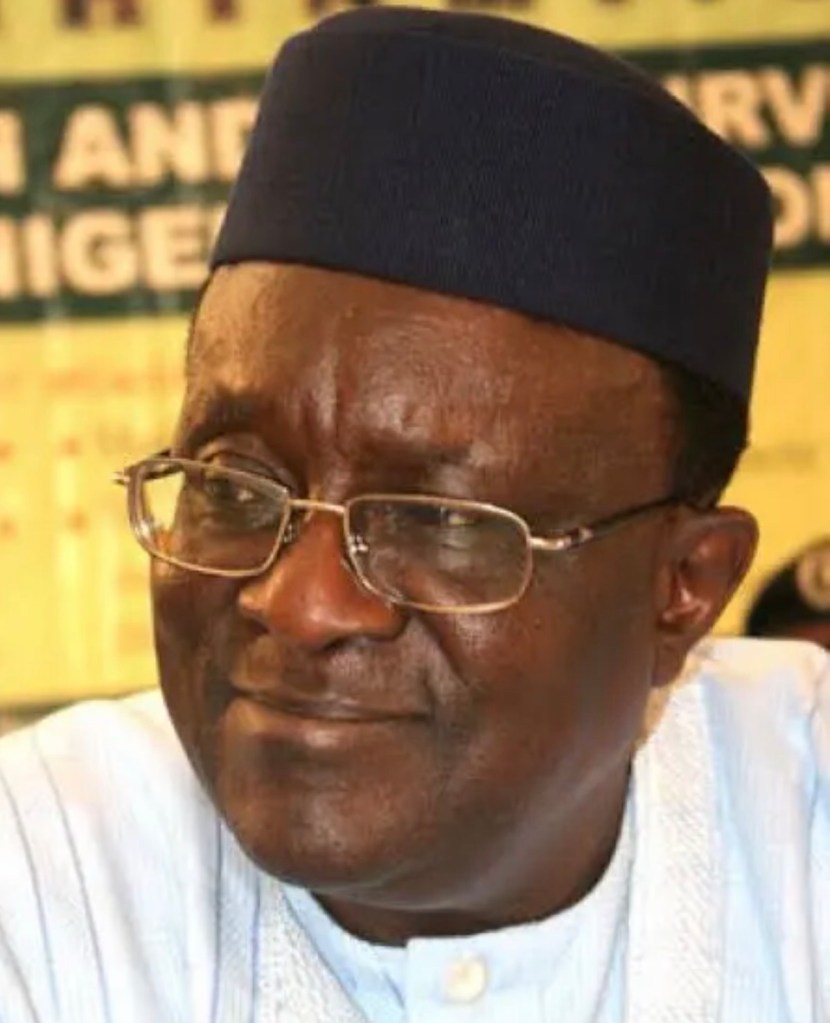
This is for my uncle, Chief Gani Fawehinmi,
the man who sponsored my education when I was 18 years old,
who supported my university journey,
who stood by me through Law School,
who saw me through my Call to the Bar,
who bought me my first car,
who gave me my first capital to begin legal practice,
and who, beyond all these, instilled in me the spirit of egalitarianism,
a commitment to society, activism with dignity, and purposeful living.
He did not have to.
He had no legal obligation to do what he did.
But he imposed on himself a moral obligation.
And there is a difference.
Legal obligations are often externally imposed.
Moral obligations are internally chosen.
He chose to show up.
I finished secondary school at the age of 18. At that point, something stirred within me, a quiet but insistent realization that I needed a change of environment.
I cannot fully explain how that thought formed.
I cannot trace all the elements that came together to produce it.
But I knew this much:
the environment in which I was growing up would not deliver the future I desired.
I did not even have a clear picture of that future.
But I knew enough to know that I needed to move.
Looking back now, I think some of that awareness came from my exposure to newspapers. My father bought major newspapers regularly when we were growing up in Ado-Ekiti. Reading was part of our culture.
Later, when we moved to Ondo, I would read those newspapers aloud to my maternal grandmother, reporting the activities of her only son, Chief Gani Fawehinmi.
Perhaps, without knowing it, those stories planted something in me.
A sense that there was more.
A sense that my environment could change.
And so, I conceived an idea:
I needed to go to Lagos.
I spoke to my twin brother.
I said, “We need to go to Lagos.”
We approached our mother and asked her to speak to her brother, Chief Gani Fawehinmi to see if he would allow us to come and stay with him.
She agreed.
And when he was approached, he responded with characteristic generosity:
He said yes.
That “yes” changed everything.
That “yes” was the pivot of my life.
My brother and I moved to Lagos.
My uncle funded our higher education.
I went to university.
I encountered new worlds, new ideas, new people.
I became his personal aide.
And step by step, my life took shape.
Looking back today, I can say this without hesitation:
I could not have become who I am today without God, and without that man, Chief Gani Fawehinmi.
He was instrumental in changing my environment.
And destinies are environment-sensitive.
Perhaps God knew what He was doing.
God is not a magician.
He works through people.
Maybe the idea to leave Ondo came because God already knew there was a man in Lagos who would take responsibility for making that idea a reality.
That man was my uncle.
Yesterday, April 22, marked his posthumous birthday.
And today, I choose gratitude.
Not just remembrance,
but reflection.
Recently, while speaking to young people, I shared what I believe are three critical elements for life:
Foresight.
Discipline.
Support.
Foresight helps you see beyond where you are.
Discipline keeps you on course.
But support, support is what carries you.
Support is the shoulder you stand on.
Support is the lifeline.
Support is the difference.
In my case, that foundational support was Chief Gani Fawehinmi.
And so I ask myself daily:
Who am I giving a chance?
Whose environment can I help change?
What support can I offer?
How can I stand for someone the way he stood for me?
How can I become a permanent reference point
in someone else’s story of transformation?
Today, I am that soul that is grateful.
That life that was shaped.
That journey that was redirected.
God used him for me.
And for that, I will always be grateful.
Thank you, Sir.
For all that you did.
For all that you chose to do.
Happy posthumous birthday sir!

