#HomilyFromThePew
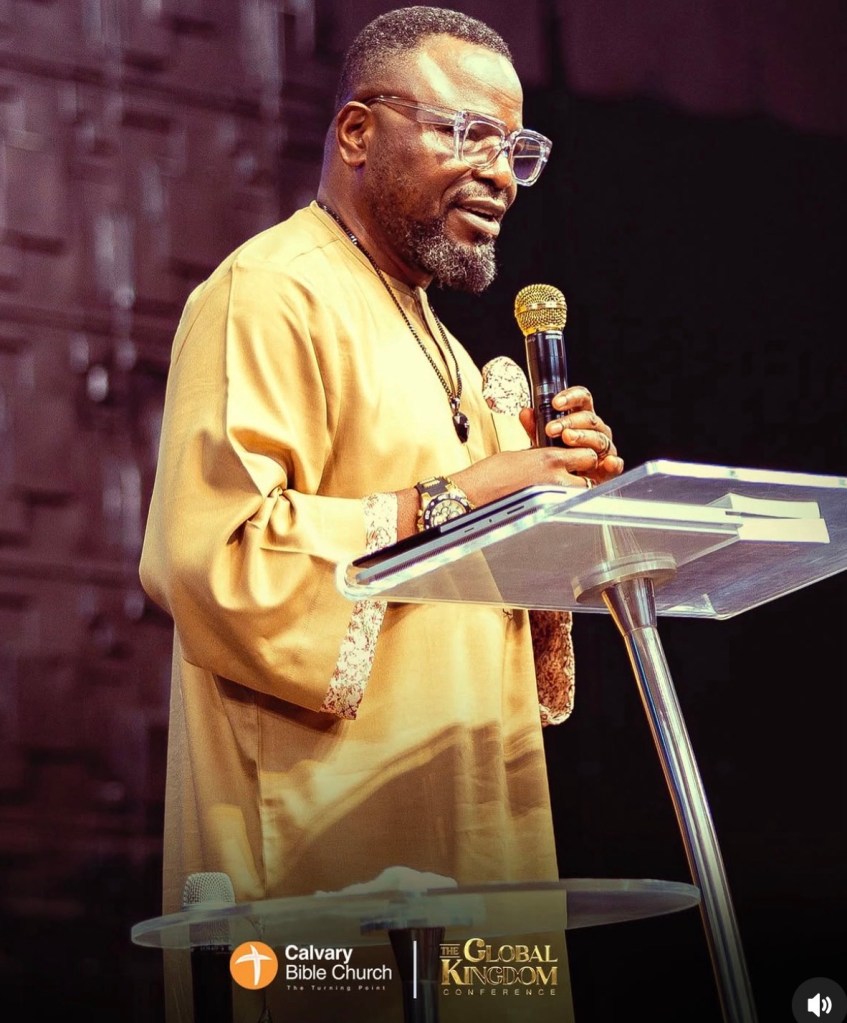
I was born on March 24, 1970.
Not with a silver spoon.
Not with a golden spoon.
Not with any spoon at all.
As I said yesterday on Sunny Irabor Live, I inherited nothing materially from my parents. No estate. No wealth. No influential name that opened doors ahead of me.
What I inherited was adversity.
I encountered abuse in its many forms as a child, beginning as early as age six.
I never truly knew innocence.
If childhood is meant to be synonymous with innocence, then I was ruthlessly robbed of that blessing.
Physical abuse.
Emotional abuse.
Neglect.
Sexual abuse.
As I wrote in my autobiography, published at age 55, I Was Erased, Not Raised, much of my childhood was marked not by protection, but by pain.
Like the prophet Isaiah described, I became acquainted with grief and familiar with sorrow.
Yet adversity was only beginning.
I repeated classes in both primary and secondary school.
Then came a defining moment. After all the setbacks and disappointments, I sat for WAEC and cleared all my relevant papers at once.
But the struggle did not end there.
The journey to the university was difficult.
The journey to Law School was difficult.
The journey into legal practice was difficult.
At every stage, there seemed to be another mountain to climb and another valley to cross.
Then, at the age of 27, I became a person of faith.
Like many young believers, I assumed that obedience would immediately produce comfort.
I thought that following God would automatically translate into a bed of roses.
I was wrong.
What followed was not exemption from adversity.
What followed was another fellowship of suffering.
As a young lawyer, I came to a crossroads.
I had a benefactor.
A man who had helped me.
A man to whom I owed much, Chief Gani Fawehinmi.
Yet I became convinced that God was calling me in a direction different from the path that had been prepared for me.
It was one of the most difficult decisions of my life.
I chose conviction over comfort.
I chose purpose over security.
I chose calling over convenience.
I cut ties and stepped out by faith to pursue what I believed God had called me to do: family strengthening, child safeguarding, child protection, and social innovation.
When I was called to the Nigerian Bar on September 28, 1999, I wrote an article in The Guardian newspaper announcing my arrival in the legal profession and declaring what I intended to do with my life.
The vision was clear.
The provision was not.
There were days I did not know where the next meal would come from.
Days of humiliation.
Days of uncertainty.
Days when my convictions were stronger than my resources.
I remember owing rent and pleading with my landlord to discuss the matter privately inside my apartment.
Instead, the conversation took place publicly before other tenants.
I remember explaining that I had recently lost both parents within one week of each other.
The response was simple:
“That does not concern me.”
Life can be hard.
Very hard.
There was another challenge.
I desired marriage, but I knew I was not ready.
I did not yet possess the emotional strength, discipline, stability, or resources required to carry a believing wife with me through life.
I was trying to find my feet.
I was healing.
I was struggling.
I was building.
I was becoming.
Then, at age 36, I found a believing wife.
Marriage brought another chapter.
After finding each other, we agreed to wait one year before having children.
One year became fifteen.
Fifteen years of waiting.
Fifteen years of prayers.
Fifteen years of learning.
Then, one month before our fifteenth wedding anniversary, God gave us our son.
Today, when people see the joy, they rarely understand the journey.
When they see the harvest, they rarely know the seasons of drought.
When they see the strength, they rarely know the wounds.
In 2005, UNICEF discovered my work.
That became a significant turning point.
It marked the beginning of a new season of visibility, influence, and impact.
But even that breakthrough did not erase the decades that came before it.
And so today, at 56, I can say this with conviction:
I know the colour of adversity.
I know its sound.
I know its taste.
I know its smell.
I know what it means to sit with grief.
I know what it means to live with unanswered questions.
I know what it means to continue walking when there is no visible path ahead.
That is why I stand with people.
That is why I fight for people.
That is why I advocate for people.
That is why I refuse to judge people hastily.
Because I know that nothing is ever quite as it first appears.
The Bible says:
“A friend loves at all times, and a brother is born for adversity.”
— Proverbs 17:17
I have often reflected on that scripture.
In my view, only those who have truly encountered adversity can fully stand with those who are passing through it.
Only those who have walked through dark valleys know how to guide others through them.
Only those who have received comfort can genuinely comfort others.
As the Apostle Paul wrote:
“Blessed be God, even the Father of our Lord Jesus Christ, the Father of mercies, and the God of all comfort; who comforteth us in all our tribulation, that we may be able to comfort them which are in any trouble by the comfort wherewith we ourselves are comforted of God.”
— 2 Corinthians 1:3–4
For me, life has never been a bed of roses.
It has been a cross.
But over the years I have learned something profound.
A bed of roses does not appear by accident.
Someone must acquire the land.
Someone must till the ground.
Someone must make the ridges.
Someone must plant the roses.
Someone must nurture them.
Someone must endure the seasons.
And even when the roses bloom, they still come with thorns.
That is life.
My faith does not tell me that adversity will disappear.
My faith prepares me to face adversity.
My faith does not promise me a life without storms.
My faith teaches me how to sail through them.
The Book of James puts it this way:
“Count it all joy when ye fall into divers temptations; knowing this, that the trying of your faith worketh patience.”
— James 1:2–3
Character is not manufactured in comfort.
Character is forged in fire.
Purpose is rarely born in convenience.
It is usually born in struggle.
That is why I understand the wisdom of my forefathers.
They said:
“Ẹsẹ̀ gírí-gírí ni ilé anjòfẹ́; anjòfẹ́ kú, a ò rí ẹni kan-kàn.” The house of the generous person is always bustling with people; when the generous person is gone, not a single person remains.
The house of a generous person is always crowded, but when the generous person loses capacity or departs, the crowd disappears.
They also said:
“Ọwọ́ ọbẹ̀ ni ọmọ aráyé ń bá ni lá; ayé ò bá ẹni lá ọwọ́ ẹ̀jẹ̀.” People readily join you to enjoy the soup, but few are willing to share your suffering.
Such is life.
And such is why adversity is a great revealer.
It reveals motives.
It reveals friendships.
It reveals character.
Most importantly, it reveals us to ourselves.
My four-year-old son recently said something profound while we were playing outside.
He said:
“The tougher the ground, the bigger the treasure.”
I have not forgotten those words, because they summarize my philosophy of life.
The tougher the ground, the bigger the treasure.
The deeper the struggle, the greater the possibility of purpose.
The heavier the cross, the greater the opportunity for transformation.
I was not born for comfort.
I was born for adversity.
I was not born to escape adversity.
I was born to redeem it.
And by the grace of God, adversity did not destroy me.
It introduced me to myself.
It prepared me for my assignment.
It taught me how to stand.
And now, having stood, I choose to stand with others.
That is my story.
That is my conviction.
That is my #HomilyFromThePew.
What is yours?

