TEXT: ISAIAH 43:18–19, NKJV
“Do not remember the former things,
Nor consider the things of old.
Behold, I will do a new thing,
Now it shall spring forth;
Shall you not know it?
I will even make a road in the wilderness
And rivers in the desert.”
Homily From the Pew
At The Fountain of Life Church on 1 November 2026, Pastor Tunde Bakare said something that has stayed with me.
There is the Old Testament. There is the New Testament. Then there is what he called the “Now Testament”: our lives as epistles being read today.
I wrote about it that Sunday, when Pastor Jimmy Odukoya introduced Pastor Mo Odukoya as his wife.
Pastor Jimmy’s message last week, “Don’t Miss the New,” deepened my reflection. God announces a new thing, then asks, “Shall you not know it?”
Could attachment to the familiar make me miss the new?
What are people reading when they encounter us?
“You are our epistle written in our hearts, known and read by all men.”
—2 Corinthians 3:2, NKJV.
Believers are an epistle of Christ, written by the Spirit (verse 3).
Does our life make Christ recognisable?
I have been a person of faith since 16 February 1997. Close to three decades later, I remain a learner.
Paul writes:
“I have no commandment from the Lord; yet I give judgment as one whom the Lord in His mercy has made trustworthy.”
—1 Corinthians 7:25, NKJV.
Addressing marriage, he distinguished a command from his judgment. I borrow that distinction humbly: this is my considered understanding, offered for examination against Scripture.
I believe God is raising the unlikely.
People whose appearance, language, background or creative expression unsettles our expectations.
Sometimes their history unsettles us. The Samaritan woman had had five husbands, yet her testimony helped bring her community to Jesus (John 4:18, 28–30, 39).
A complicated history is not, by itself, evidence of present wrongdoing or God’s absence. Christ’s answer to Paul reminds us that His strength is made perfect in weakness (2 Corinthians 12:9).
Their history must not become the boundary of our willingness to hear them.
By “Now Testament,” I mean the present expression of the New Covenant in human lives. Christ remains the foundation. Scripture remains our standard. Our expectations must remain open to correction.
Peter’s experience instructs me.
In Acts 10, he resisted his vision’s instruction because he had never eaten anything common or unclean. God answered:
“What God has cleansed you must not call common.”
—Acts 10:15, NKJV.
Peter explained that God had shown him not to call any person common or unclean (verse 28).
He had walked with Jesus and preached at Pentecost.
Yet his understanding still needed enlarging.
Could I know God sincerely and still misunderstand whom He is willing to receive?
After Cornelius’s household received the Spirit, Peter asked:
“Who was I that I could withstand God?”
—Acts 11:17, NKJV.
Am I defending God’s Word or the limits of my familiarity?
David was not among the sons Jesse initially presented to Samuel. He had to be sent for. Scripture describes him as ruddy and handsome, yet Goliath despised his youthful appearance (1 Samuel 16:11–12; 17:42). The overlooked shepherd became the giant’s conqueror.
Being good-looking did not mean being reckoned with. Appearance could not measure what God had placed within him.
The apostles’ lack of recognised scholarly standing astonished their hearers (Acts 4:13). Saul, the persecutor, became a preacher (Acts 9:1–22).
Paul reminds believers:
“For you see your calling, brethren…”
—1 Corinthians 1:26, NKJV.
Not many were considered wise, powerful or noble. Yet God chose the foolish, weak and despised, leaving no room for boasting (verses 27–29).
Before questioning another person’s calling, perhaps we should remember our own.
The unlikely have always been part of the biblical story.
Openness is not confined to the young. Joyce Meyer’s account of receiving tattoos late in life reminds me that established believers can reconsider familiar assumptions.
Earlier, in Teenagers Are People Too!, she recalled initially opposing her son Dan’s tattoos. She writes: “Finally, he did get some, but one of them is my name in Chinese, so I couldn’t be too upset.” She explained that her objection reflected personal preference rather than judgment of people with tattoos.
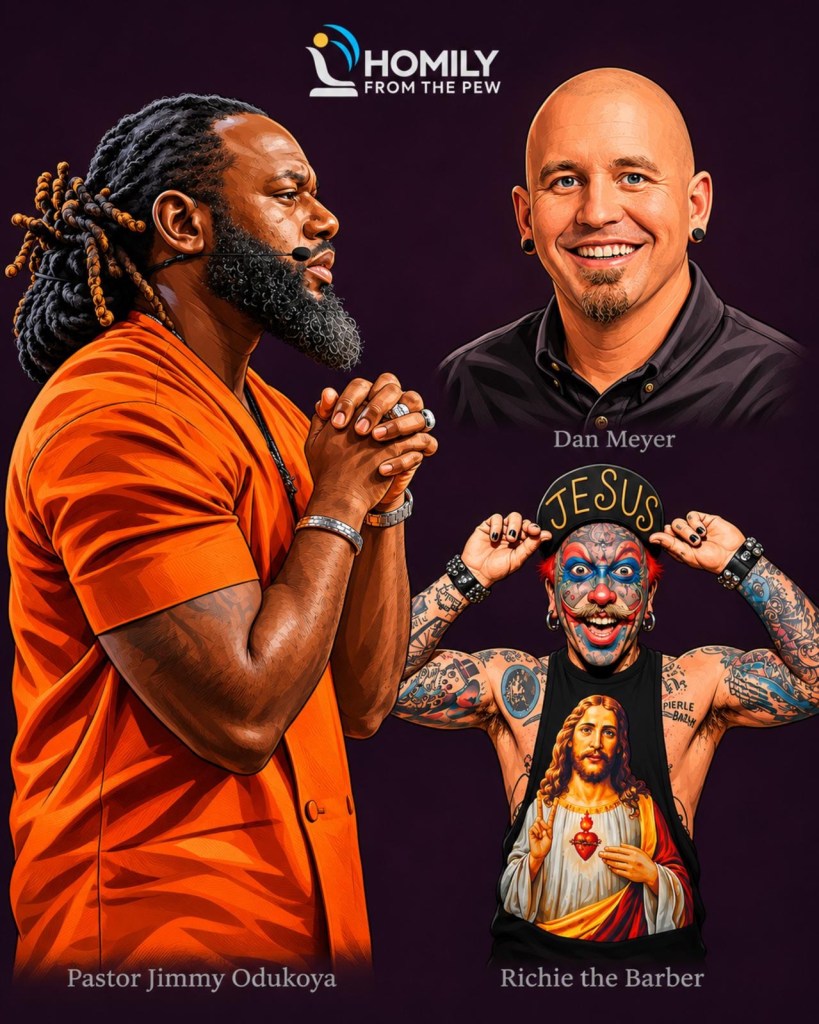
Dan, pictured with earrings in both ears on the ministry’s website, now serves as its CEO of U.S. Operations. His appearance has not precluded leadership.
Wesley’s exclusion from Anglican pulpits, followed by outdoor preaching, reminds me that familiar religious spaces do not exhaust where the gospel can be heard.
A heart for the new can remain rooted in Christ.
Erwin McManus puts his intention provocatively:
“I’m here to violate your view of reality.”
For me, the challenge is to let truth disturb assumptions I have mistaken for truth.
Romans 14 warns against contempt and judgment over food and days. Faithfulness to Christ must be distinguished from conformity to our preferences.
This brings me to culture shaping.
“I have become all things to all men, that I might by all means save some.”
—1 Corinthians 9:22, NKJV.
Paul adapted under Christ’s authority. At Athens, he engaged local beliefs and quoted poets while proclaiming God and calling for repentance (Acts 17:22–31).
What language does this generation understand? What troubles it? Where does it discover belonging?
How do our words, conduct, creativity and service make Christ known there?
Culture shaping must influence how people understand dignity, exercise power, treat families, conduct business and respond to suffering.
I think of Pastor Nathaniel Bassey and Greatman Takit’s collaboration, “You Are Good.” I remember hearing Pastor Bassey acknowledge that some people would receive Greatman’s ministry differently from his own.
Can an established voice celebrate an emerging voice without demanding an imitation?
Pastors Jimmy and Mo Odukoya, and other believers whose expressions challenge familiar expectations, give me hope.
Neither familiarity nor novelty proves faithfulness. We must examine teaching, character and fruit.
I want openness with discernment: honouring those who carried the faith before us while supporting those bearing witness now.
I am glad to be alive in this generation.
A new dawn. A new beginning. Fresh opportunities to make Christ known.
I, too, am being read: at home, at work and in how I treat someone whose expression of faith differs from mine.
The Now Testament asks more than whether I can recognise an unlikely messenger.
It asks whether someone encountering my life can recognise Christ.
Taiwo AKINLAMI
MinistryofClarity
Follower of Christ. Husband. Father.Egalitarian. No-Judgment Zone Advocate. Goodwill Investor.
Rebel with a Cause. Thriver. Culture-Led Family Strengthening, Education and Child Safeguarding Attorney, Pioneer and Innovator. Value-Based Parenting Ideologue.Three Decades in the Saddle.

