VITAL OBITER®
Diary of a Roving Counsel
Death is a debt we all owe.
Wicknell Chivayo, his wife and others who perished in that helicopter crash in Zimbabwe on September 30, 2026, have paid theirs.
Their deaths deserve compassion, not celebration.
But death does not bury history. And Chivayo’s death raises troubling questions about the relationship between questionable wealth and political power in Africa.
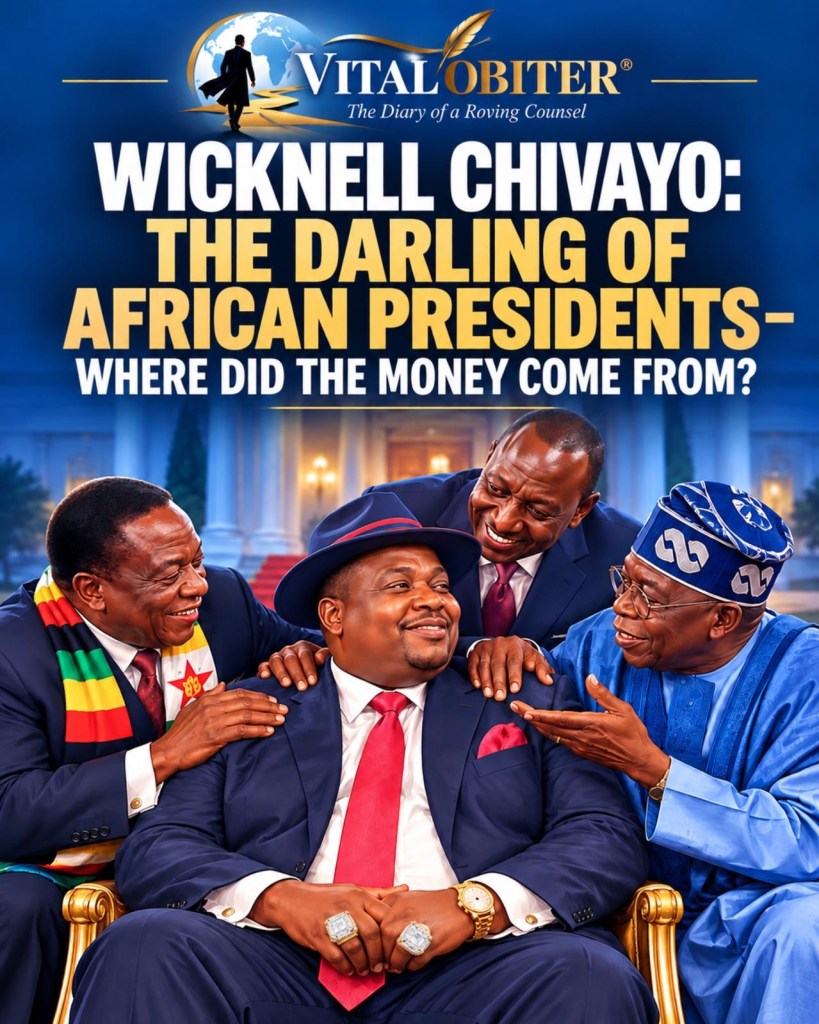
Who exactly was Wicknell Chivayo, and why was he the darling of African presidents?
At approximately 22, Chivayo was convicted of money laundering in Zimbabwe in 2005. He served three years in prison. His conviction was subsequently reportedly overturned on appeal.
He emerged from prison and, within years, became spectacularly wealthy.
Private jets. Luxury cars. An extraordinary lifestyle.
By September 2026, a citizen-led compilation estimated his publicly announced gifts at US$46.64 million, distributed or pledged to musicians, religious leaders, political figures, sports personalities and others.
US$46.64 million in gifts alone!
But what business generated the wealth behind this extraordinary generosity?
When we speak of Bill Gates, we know Microsoft. Jeff Bezos built Amazon. Elon Musk’s wealth is connected to identifiable enterprises.
What was Chivayo’s equivalent?
Yes, he had companies. Intratrek Zimbabwe and others.
But registering companies is one thing. Building productive enterprises that explain extraordinary wealth is another.
What did these companies manufacture? What did they deliver? What sustainable commercial activities generated his fortune?
Instead, his business history leads us repeatedly to controversial government contracts.
Take Zimbabwe’s Gwanda solar project.
In 2015, his company secured a contract worth approximately US$172 million to develop a 100-megawatt solar plant.
Eleven years later, the project remained unfinished.
Where is the electricity? Where is the completed project? What became of the money?
Then came the election-materials procurement scandal.
An investigation by Open Secrets and The Sentry, drawing on a leaked South African Financial Intelligence Centre report, traced more than R800 million from election-materials supplier Ren-Form into accounts belonging to Chivayo’s businesses.
Another R157 million reportedly went directly from Zimbabwe’s Finance Ministry to a company associated with him.
Chivayo denied that the payments were kickbacks. Zimbabwe’s anti-corruption commission later announced that it had found no evidence establishing his involvement in the alleged procurement fraud.
But the reported financial trail demands explanation.
What legitimate services justified those payments? Who authorised them? What did the Zimbabwean people receive?
Then consider the reported US$437 million cancer-treatment equipment contract involving a company linked to him.
Cancer-treatment equipment!
How much equipment was delivered? To which hospitals? At what prices?
And while these questions surrounded his wealth, Chivayo was distributing expensive gifts, including to people connected with public institutions.
Reports described gifts to lawmakers and proposed donations to security services. A senior lawyer rejected his offer of a luxury vehicle and cash. A church leader reportedly rejected US$2 million.
But philanthropy is not my concern.
Bill Gates gives away billions.
The question is not why Chivayo gave. The question is where the money came from.
Now, something even more troubling.
His access to African presidents.
Zimbabwe’s Emmerson Mnangagwa. Kenya’s William Ruto. Nigeria’s Bola Ahmed Tinubu. And other African leaders.
Photographs. Presidential visits. Personal encounters.
President Ruto reportedly drove Chivayo to his helicopter after a family ceremony in Kenya.
Imagine that!
How many ordinary Kenyans enjoy such access?
How many Nigerians can simply walk into Aso Rock and secure a personal audience with President Tinubu?
Presidents have protocols. Security arrangements. Gatekeepers.
Who opened these doors for Chivayo?
What did these presidents know about his background and the controversies surrounding his wealth?
What was the foundation of their relationships?
And what message does such extraordinary presidential familiarity send to institutions responsible for investigating questionable public contracts?
I am asking why a man surrounded by such serious financial controversies enjoyed exceptional access to the highest political offices on our continent.
These are not questions about one man’s generosity.
They are questions about Africa’s political culture, public accountability and the relationship between wealth and power.
Chivayo has died.
May those who perished rest in peace. May their families find comfort.
But the presidents are alive.
The public institutions are alive.
And the citizens whose resources finance government contracts are alive.
Who made Chivayo wealthy? What did he give in return? And why did African presidents embrace him so warmly?
Death has silenced Chivayo.
It must not silence these questions.
Do have an INSPIRED weekend with the family.
Follower of Christ. Husband. Father. Egalitarian. Goodwill Investor. Attorney. Author. Thriver. Culture-Edge Family Strengthening and Child Safeguarding Pioneer, Innovator and Practitioner. Value-Based Parenting Ideologue. Change Agent. Rebel with a Cause. Three Decades in the Saddle.

